Subscribe in: Apple Podcast | iPhone | Android | Google Podcast | Spotify | Pandora | Amazon Music | iHeartRadio
 Today's podcast is a little bit different. I'm going to give you an update on some really great changes that are coming to the Tapping Q & A website. Below is an edited transcript of the information that I am sharing in this week's podcast so that you can either listen by clicking the play button above or read the text below, whichever works best for you.
Before I share the story of the upcoming website changes, I'd like to provide some context based on what has happened over the course of the last couple of months, as well as the last 14 years.
Since I started working with clients about 14 years ago, there have been three separate occasions on which a number of clients fired me, all within the space of about ten days.
The reasons they gave ranged from changes in their lives…to someone complaining about the clinking of the ice cubes in my water glass, which led them to believe I wasn't paying attention to them or the session. (It's a long story.)
The first time this happened it completely freaked me out. All of a sudden a number of clients decided to stop working with me and I started to wonder if my business could succeed. The second time it happened, some years later, it freaked me out, but much less so.
Since this had happened twice I took the time to think and reflect to see if I could figure out what was going on. On both occasions I came to the realization that I had been going through a transformation and evolution at a rate that the people I was serving were not.
This doesn't mean that I was more evolved than my audience, but rather the things that were interesting and transformational for me were not the same things that were lining up with my audience.
We were out of sync and no longer a good fit. I coach my business clients all the time around the idea that when someone says “no” they're not judging you and they're not judging your work. They're saying this is not the right fit for them right now, based on the information they have and on their current resource state.
It's a statement of fit and nothing more.
The third time that this happened in my practice I didn't freak out. Instead I thought “Oh! Look at that. Yes, I have been evolving and I have been transforming.” I was excited because the last two times this had happened new people, new opportunities, and new experiences showed up that were a much better fit for me, and were a much better fit for my clients.
I want you to hear that particular piece of information loud and clear. It's not a value judgment on me or a value judgment on them. It's a statement of fit.
The fourth time
If you've been paying attention to the website at all, in the last couple of months, I have been sharing with you a truly amazing program called the Tapping Success Academy.
Over the course of February, March, and April I felt frustrated and disheartened that the program had not been as successful as I'd hoped. I spent hundreds of hours creating and refining it and was so excited about the quality and depth of the content that it was deeply disappointing not to have a more enthusiastic reception.
Last month I was on Zoom with one of my clients. It is her habit at the beginning of every call together for her to check in with me. She likes to know what's going on in my life because it makes it easier for her to be coached. I shared with her my disappointment in how the program had not been as successful as I would like it to be.
She is a highly intuitive person and her response was, “Well, of course, it isn't working out the way you would like. I know why and you'll figure it out.” I replied by saying “Please, if you know, just tell me what's going on!” She replied, “You've outgrown your audience.”
And that made perfect sense to me.
The reality is “outgrown” is again the wrong word. The reality is that over the course of the last year and a half I have been doing a great deal of internal work. I have been tapping daily and that has resulted in some amazing transformations in my life, both personally and professionally.
The problem is I have been presenting and producing content from that pre-transformational space, not from where I am right now.
Reflection on where to go from here
Over the course of the last three or four weeks, I've spent a lot of time ruminating on this and trying to figure out the best way forward. I have realized that my messaging and how I share resources need to be much clearer. I need to make it much easier for you to find the resources you need on the website.
Right now the website is trying to do too many different things, which leads to confusion on where to find the most useful tool in the moment when you are looking for it.
Last weekend I was working in one of my favorite coffee shops here in Brooklyn and I came to a drawing that makes a great deal of sense for me. It is a Venn diagram with three intersecting circles that has made the way forward for the website clear and concise so that you will easily be able to find the content you need.
If you have been paying attention to the website, then the three areas that most fascinate me will not surprise you.
The first is the idea of changing resource state. When I say resource state, I am referring to the way that we feel. It is about changing our emotions. It's going from sad to happy, from hesitant to confident, or from tired to energetic. Our resource state is something that we can change in a moment, and when we shift our resource state, we are able to make different choices.
The second area I'm interested in is taking action and clearing self-sabotage. I love thinking about this because for me the consequence of transformation is taking new action, which leads to new possibilities and results.
The third area of my focus is the philosophical and spiritual ideas around transformation and how we show up in the world. Sometimes this is purely a spiritual conversation, while at other times is a deeper exploration of how we see ourselves in the world and how we use these tools.
As a perfect example of this, at the end of last month's Art of Delivery Monthly class, the session ended with a profound group conversation on the topic of revenge. We talked about what revenge is, why we have revenge fantasies, and how we approach feeling vengeful. We discussed how you can tap for it and why it is part of the human experience.
The new structure
I have realized that I need to restructure the way I present content.
The Tapping Q & A Podcast will continue to exist in a form that you are used to, but there will be a couple of slight changes. The first change is that the podcast will come out every other week instead weekly. It will be focused on interviews with other practitioners to give listeners access to new worldviews and particularly how you can hone the art of delivery for deeper transformation when tapping.
In the weeks that new podcasts do not come out, I will share resources that focus on how we can change our resource state. Resources will include tools, approaches, tapping scripts and tap-along audios to shift your resource state and help you to feel better in this moment.
To facilitate this there will be upgrades to the website to make it much easier for you to find the right resource. Over the coming months, as the changes happen, if you struggle to find something that you knew where it was before just shoot me an email.
Two New Podcasts
To serve my other two areas of interest, over the course of the next four months I will be creating two new podcasts. One will be purely a conversation about the spiritual aspects of who we are in the world and how we are called to connect with others as we love, support, and learn from one another.
It will not be specifically a tapping podcast, but the same concepts will apply. When that podcast is launched around the second or third week of June, I will send you a short note about it, but I promise not to flood your inbox or this podcast with that content because they are so different.
The second podcast will come out three or four times a week, starting later this summer. These episodes will be short five-minute reflections, specifically around taking action, clearing self-sabotage, and business building.
The Future
All of these changes reflect what is going in my mind, heart, and soul. I hope you continue to join me on this journey, but if these changes do not serve you, I'm sure you will find another source of great resources that meet you where you are.
If you have any questions about anything that I have shared, I would love to hear from you.
As we move forward I encourage you to:
- Keep asking questions
- Keep making recommendations about what resources would be useful for you
- Share the resources with others who might find them useful
I understand that I am not everybody's cup of tea. I do not have a monopoly on the best way for transformation. My hope is that as I share what I learn from my client experiences, from my training, from my personal reflection, and from my own transformation, that it might occasionally contain a nugget or two in there that is useful for you too.
Again, just drop me a note, if you have any thoughts or questions.
Subscribe in: Apple Podcast | iPhone | Android | Google Podcast | Spotify | Pandora | Amazon Music | iHeartRadio
 One of my favorite parts of running a question and answer website are the questions I am asked by readers and listeners like you. The reason I love it so much is because answering your questions pushes me to think about the work that I do in new ways so that I can clearly articulate and share my approach to tapping.
 The human experience is complicated. At times it can feel like we are being pulled in multiple directions, as if we are of two (or many) minds. I recently thought this was expressed perfectly on one of my favorite TV shows, Project Runway (US version). In the midst of struggling with choosing her creative direction one of the contestants, Victoria Cocieru, said “In my brain I have a thousand little brains and they are fighting with each other.”
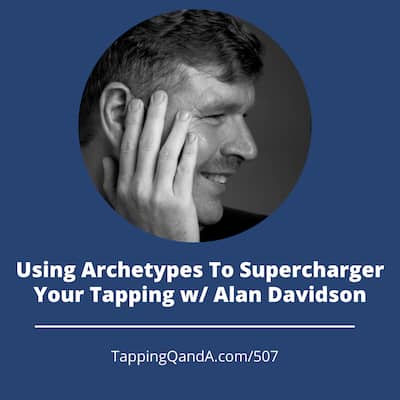
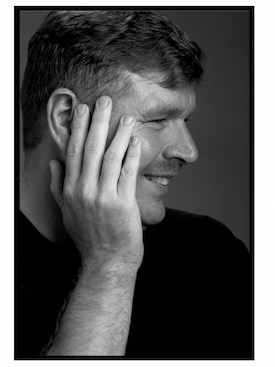 Guest: Alan Davidson
 Over the weekend my friend, and all-around amazing thinker and practitioner, Alan Davidson died. Next week I will be sharing the last interview I did with him.
 Recently I was writing about the history of tapping, tracing the different tapping points used over time and also why different practitioners and innovators had added and subtracted points.
 Here in North America we are just emerging from a long, dark winter and many of my clients have shared their struggles with low energy levels, particularly first thing in the morning or when they hit a wall mid-afternoon.
 Recently in a social media post a friend used the phrase “fiercely kind” which really stuck in my mind, although to be honest I wasn't exactly sure what it meant.
 The way that I have described the emotional toll of the last year is as if we are paying a 20% emotional tax every morning when we get up. This means that our energy is at a lower ebb, we think more slowly, and many everyday activities seem to take more effort.
 Twelve years ago today the very first episode of the Tapping Q and A Podcast was published, which means a little celebration is in order.
 For me, jealousy is one the most corrosive emotions. Jealousy floods the mind with all sorts of negative thoughts, leading us to think poorly about ourselves, about the object of our jealousy, and amplifies our feelings about the unfairness of the world.
 In my mind there are three main reasons why we tap.
 All of us have experienced failures in our past. It is an unavoidable part of being human.
 Recently I conducted a survey of my readers and listeners asking them what their biggest struggle with tapping is. There were five really common responses:
 In the middle of the day it is easy to find ourselves distracted. One minute we are working on a task…the next we are sucked into one of our social media accounts, glued to a YouTube video, or conducting some frivolous internet research.
 I spend a lot of time helping my clients to get clear about the actions they want to take. They often think their problem is not knowing exactly how to do what they want to do.
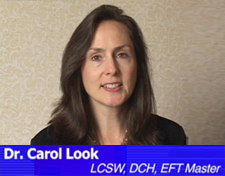 Guest: Dr. Carol Look
 We have all been trained to push on, to push through, and to maintain a stiff upper lip.
 As one of the craziest years in living memory winds down, there is a great desire to find peace, calm, and stillness. This week's podcast contains a simple tap-along process to help calm your system and gain some mental clarity.