For some reason, certain situations and certain people just push our buttons, despite knowing logically that our response is irrational and shouldn't elicit as much emotion as we feel.
In this week's podcast I share with you a simple 7-step process you can use when you are having your buttons pushed.
In the audio I also share with you how you can get a free printed version of this tool (and 13 others).
 Our relationships are living, breathing organisms, alive with the constant dynamic of give and take. At times there is a lot more give than take. This can affect our feelings about the relationship, about the other person in the relationship, and can even have a detrimental effect on our other relationships
 In
In 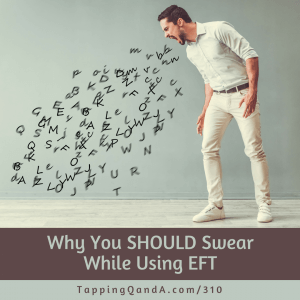 Did you know that swearing is good for you?
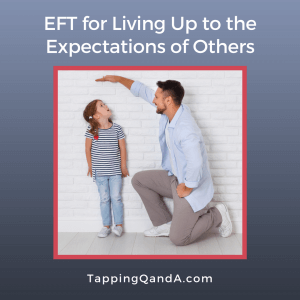 One of the situations that my clients struggle with the most is dealing with the expectations of their loved ones.
 We all know that tapping is a powerful tool when we are in pain, distress, and discomfort. Did you know it can also be a useful tool when we are celebrating success?
 Recently I was listening to the actor and comedian
 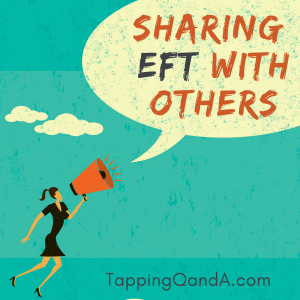 Sharing EFT/Tapping with our loved ones can be a difficult task, mostly because it is kind of weird.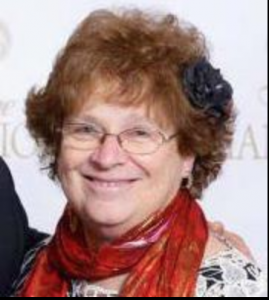
 As much as we would like to share tapping with our friends and family, it is not something that we can share with young children.
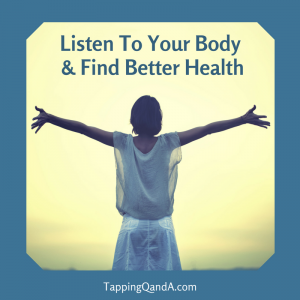 In our modern world it is so easy to become disconnected from our bodies, especially as most of us spend our days seated at desks, rather than engaged in any kind of physical labor.

 Sometimes we tap with the aim of just feeling better, without a clear focus for our tapping. We might feel unsettled or out of sorts, but not in a precise way. From a tapping point of view this can pose a problem because often the best results come when we are very specific about an issue.
 Quit has become a dirty word.
 The beginning of a new year provides a great opportunity to reset and refocus.
 Recently my friend Jake Khym was being interviewed on a podcast and he brought up the idea of “the art of love.” He talked about how being loving is a not only a skill, but a skill at which we can get better.
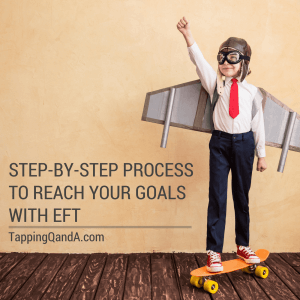 One of my favorite ways to use tapping is to remove whatever is standing in the way of taking action towards creating the life we desire.
 Tapping for pain and distress is easy. You can name exactly what is wrong (the pain) and you have a clear idea of what you want (relief).
 One the main reasons that we don't do the tapping we know would be useful is that we don't know where to begin. We have a general idea that something isn't right, but we can't quite put our finger on it. When we are in this situation tapping feels like a giant waste of time.