|
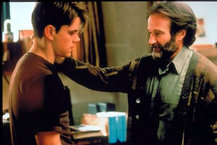
The most memorable moment from the 1997 movie “Good Will Hunting” is when Will (played by Matt Damon) is talking with Sean (played by Robin Williams) about his history of abuse. Will is sharing how his father beat him.
Six times Sean says to Will, “It's not your fault”.
Again and again.
“It's not your fault.”
Will slowly breaks down.
“It's not your fault.”
By the end he finally believes him.
It's Not Your Fault!
Over the years it is amazing the range of things that my clients have taken credit for in their lives. Everything from partners cheating to animals being hit by a car. I even had one client take credit for a flash flood that destroyed everything in her basement.
Please, don't get me wrong.
I am not saying that we are simply at the whims of the universe and that we are helpless victims of the fates, but I do think people often take too much responsibility for what is happening to them.
Personally, I think the problem comes from the way most people use the word ‘manifest’. Because it is possible to create new opportunities in our lives people take it to an extreme and think that everything in their life is a direct result of their thoughts and the choices that they have made.
Somewhere there is a line between what we have created in our lives and what is outside of our control. And to be honest, I am not smart enough to know where that line is.
I do know this: most of my clients err on the side of taking too much responsibility.
AND what is worse is that they beat themselves up for “manifesting” these bad things into their lives. I think this causes two problems. First, I believe it is harmful to blame ourselves for something that isn't our fault. Second, when we do this we often remain in an emotional state of blame and self-recrimination and so we don't take any new positive action.
There are so many times where I just want to say over and over again to my clients “It's not your fault.”
It's Not My Fault, So Now What?
Regardless what has happened leading up to this point and whose “fault” it is, what is much more important is how we choose to react.
The one thing we DO have control over is our reaction. The one thing that we can take responsibility for is what happens next. In order to do this we need to release the feeling of blame and shame for what we have created in our life.
When my clients are caught up in this blame/shame response the first thing I have them do is tap to something like this:
Right now there is something in my life that I don't like…I might have manifested it in my life…Or it might be something that has shown up because of things outside of my control…Someday it will be important for me to get to the root of how this happened…But right now the most important thing is how I respond…Right now the most important thing is that I take responsibility for my response…Right now the most important thing is the choice I am going to make next…Part of me wants to blame myself for this…Part of me want to punish myself for creating this…I choose to let that desire go for now…I choose instead to make the best possible choice as I move forward…I choose to take responsibility for my response…I choose to make the best possible choice to get out of this…I choose to make the best possible choice to move forward…I choose to take responsibility for what I do next…That is where I have the most control.
It's About Your Next Action
I want to be very clear. I do think it is important to understand why things happen in our lives. It is even more important to recognize the patterns that are showing up and to take responsibility for any unhealthy choices that we are making.
BUT, in the short term what is more important (at least in my mind) is the choices that we make next in response to what is happening in our lives. What we do next is more important than how we got here.
When you are stuck in the blame/shame cycle and things aren't going right, take a few moments to tap through the script above.
If you are looking for more tools and tap-alongs to help you make better choices in response to where you are come join us in the Ruach Center. Currently there are over 100 tap-along audios and more than 25 tools to help you tap in response to wherever you find yourself.
 Good morning (and Happy Thanksgiving to my Canadian friends)!
 EFT does a great job of helping us to feel better in the moment. In a very short time we can go from being emotionally overwhelmed to calm. But we know there is much more that can be achieved with tapping. Not only is it helpful for short-term relief but it can also help create long-term change.
 Guest: Steve Wells