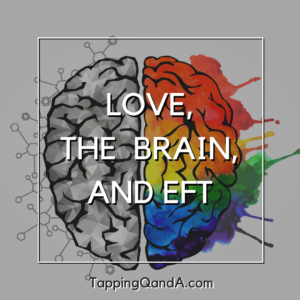
Fear is one of our most primitive defense mechanisms. It is the reason that humans as a species exist. Our ability to notice danger and to feel are what keep us safe.
The problem is that we don't live in the same world we did 10,000 years ago. We no longer need to be on guard at all times for fear of being eaten by wild animals.
The way we feel fear has not evolved to match the world we live in. Because of this, our subconscious disposition is towards fear.
This makes openness, connection, and love harder.
This week I have a conversation with Rick Wilkes about fear, love, the primitive brain, and how we can use EFT to transform our daily experience to be filled with more love and more connection.
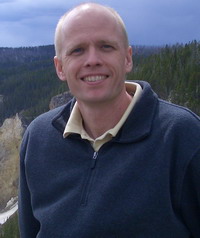 Rick Wilkes |
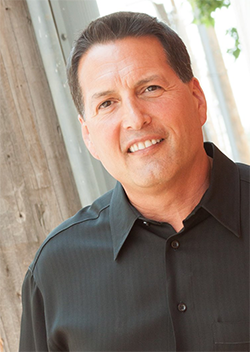
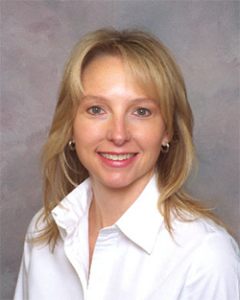
Guest: Rick Wilkes, LMT
Contact Info: thrivingnow.com, Rick@Thrivingnow.com, 1-828-357-4674 or 1-888-222-3856
Bio: Rick Wilkes is an EFT practitioner based in Asheville, NC. Over the last six years Rick has worked with more than 1500 clients. He works regularly with individuals and with his Thriving Now Groups.
Here's what one of Rick's loyal clients says: “Working with Rick Wilkes both privately and on team calls has helped me greatly to release the past, move more confidently into the future, and mostly to be more joyfully present in the now. Rick’s open-hearted broader perspective, amazing intuition, and great sense of humor always help me to get right to the core and effectively reframe whatever issue I have. Listening to him work with others has helped me to get in touch with stuff I didn’t even know was there and inspired me in my own work with others. It is a blessing and honor to work with such a master.”
Rick's articles, programs, and products Thriving Now

 Question: I would like to know whether it is best to talk out loud when you're tapping or if it's okay to just focus on the issue, memory, or body sensation without using words? I wonder if whether using words silently or out loud engages a specific part of the brain and whether or not this has a different effect?
 The emotional journey that mothers go through during the birth of their children is increasingly better understood. Birth is not only a physically taxing process, but it also takes a significant emotional toll.
 Question: For people who don't like numbers and tend to measure intensity in very subjective terms, how do you guide them to more meaningful/useful measurements?
 Question: How can we use tapping as a remedy for others who lack confidence and suffer from various unwanted habits and physical problems?
 Question: When you're doing your tap-along audios you say the words “in big and small” ways a lot. I never really connected with these phrases. Could you expand on why you use those phrases?
 A few weeks ago I put out the call for your questions about EFT and how to best use it.
 When Gary Craig first introduced EFT he very intentionally presented it in a way in that encouraged others build upon his work, much in the same way he had built upon Roger Callahan's Thought Field Therapy (TFT).
 Before I commit to working with a new client we have a conversation to see if we will be a good fit for each other. First, I ask the potential client what they would like to change in their life. At this point they usually give me a clear description of what is wrong and I follow up by asking what they would like instead.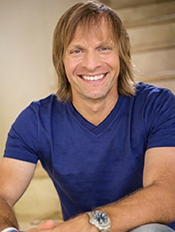
 Many people don't know that the T in EFT stands for “Techniques”, which is plural.
 It is natural to want credit for the work that we do. Being given credit and recognition feeds our healthy human need for being acknowledged as significant. It’s normal to want to feel as though your contribution matters.
 We can find ourselves in the middle of catastrophe in an instant. A catastrophe can impact us personally (like a fire in our home) or can involve our entire community (like a natural disaster or mass violence).

 Guest: Steve Wells