• Skip to primary navigation
  • Skip to main content
  • Skip to primary sidebar
  • Skip to footer
  • Leave A Tip

Tapping Q & A with Gene Monterastelli - Get the most out of tapping and EFT

  • Learn Tapping
  • Podcast
  • Video
  • About Gene
  • Work w/Gene
  • Archive
    • Every Post Ever
    • Q&A
    • Podcast
    • Videos
    • Tools
    • Tap Along
    • Sessions
  • Events
  • Contact Us

Pod #13: Solution Focused Brief Therapy w/ Rod Sherwin

June 25, 2009 by Gene Monterastelli

One of the most common questions I get about tapping (EvEFT/EFT) is “What do I do when I don't know what memories from the past are effecting my behavior or emotions today?” In this interview I talk to Rod Sherwin about a very cool protocol call Solution Focused Brief Therapy. In this protocol you don't have to worry about why you are the way you are, but instead it focuses on how to move to what you want. Personally, I find this to be a great approach because even when I don't know why things are the way they are I am going to know where I want to be or who I want to be. In this interview Rod lays out the basic steps of SFBT that can easily be added to any tapping routine.


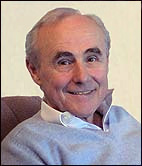
Rod SherwinGuest: Rod Sherwin

Rod's Contact Info: web @ tap4health.com, e-mail @ rod@tap4health.com, phone @ +61 3 9650 0250, twitter @ rodsherwin; facebook @ facebook.com/Tap4Health; youtube youtube.com/rodsherwin; google+ Tap4Health

About Rod: Rod Sherwin, known as “the tapping man”, is an Energy Therapist from Melbourne, Australia. Rod runs the Tap4Health EFT Practice and works with clients all over the world on issues such as stress, anxiety, trauma, abuse, anger management, depression, weight loss, public speaking and presenting. Rod's approach is an unconventional and original combination of genuine warmth, respect, intuition, and skill.

Rod's primary tool is the Emotional Freedom Techniques (EFT) which he combines with his experience in Energy Medicine, Solutions-Focus Brief Therapy, 6-Human Needs Psychology, and Neuro-Associative Conditioning. Rod's original qualifications are in Computer System Engineering and Computer Science which gives him a very grounded and practical aproach that focuses on getting real results.

Rod loves spreading the word about EFT and speaks to groups, small and large, including community groups, social groups, and corporates.Rod has lived in Melbourne for since 2005 and, while he enjoys the city life, he is originally from a small country town in North Queensland called Charters Towers.

Links & Resrouces From Episode:

  • EFT training by Rod from Fundamentals through to Practitioner see
  • Blog with over 100 articles on EFT by Rod
  • Solution Focused Brief Therapy @ wikipedia

Music used in this podcast from stefsax and panu moon

Filed Under: Podcast Tagged With: Abundance, Audio, Awareness, Future, Premium Member, Rod Sherwin, TapAlong Member

Tapping For Poker

June 20, 2009 by Gene Monterastelli


photo by Christian Fortier
Some people aren’t comfortable with the idea of gambling, but my experience working with a professional poker player demonstrated how our emotions can override our logic, how this can be disastrous, and how easy it is to use tapping (EvEFT/EFT) to make changes.

There are types of gambling that are pure chance such as the lottery or slot machines. These games require no skill. The only choice the player makes is whether or not to play. With each play there is a statistical chance of winning and losing.

Poker is different from games of chance. There is a component of chance involved in the cards that you are dealt, but poker players make a number of choices on how to play their cards. A good poker player considers the playing patterns of his opponents as well as how the other players at the table think he plays. All of this is in addition to the cards he has been dealt. Because of this, it is much less about the cards that have been dealt and much more about how the cards are played. For this reason poker is not a game of chance, but a game of skill with chance elements.

Because there is an element of chance in poker, a player can run good or bad in a short period of time, (a small sample set of hands) based on the cards he/she is dealt, but over the long run a player’s skill is going to show. The more hands that are played, the more likely it is that the better player is going to be a winner overall.

Professional poker players understand this. They don’t think in terms of winning one hand, or of being a winner over one session of hands, they think in terms of their average over time. Very good players will know this right down to an average hourly wage. For example, a particular player might know that if she/he is playing in a game that has a minimum bet of $2, they will make forty dollars an hour – in the long run – because of his/her skill level.

A comparable example would be investing in the stock market. Stocks and markets move up and down each day, but over a long period of time they have trends. A good investor knows the longer he is in a certain investment, the more likely his long-term return is going to match the trend.

The way a poker player is able to combat this variance (up and down swings), is by playing as many hands as possible. The more hands they play, the more they are going to insulate themselves from up and down swings. With the advent of internet poker, players are able to play many games at the exact same time by opening multiple computer windows. To combat this variance some players are known to play as many as one hundred hands an hour… in six games at once… for stretches of ten or twelve hours straight. That’s as many as six thousand hands in one stretch!

You can imagine the amount of concentration it takes to do this. Not only is a player constantly recalculating the different statistical outcomes of a hand based on each new card, they are also having to keep track of the play tendencies of the eight other players involved in each hand.

As play unfolds it is possible for players to get very emotional. It is possible to lose a hand that you had a 90% chance of winning, causing great anger. It is also possible to win a hand you were a significant underdog in, causing great joy. Both of these circumstances can be very dangerous. When a player becomes too emotional (regardless of which emotions) he/she can start making poor decisions. In poker terms this is called going on ‘tilt’.

When a player is on tilt they are not paying attention to all of the factors they normally pay attention to. They begin to play very poorly, and they can lose all of the money they had won over a number of hours (or days) of play, in one or two hands.

Recently a professional poker player, “John”, who was having a major problem with his game, approached me. John plays six to eight hours a day, five days a week, and poker is his full time income. John understands how long he can stay focused. He never plays more than eight hours at a time because he knows that as his mind becomes fatigued it is harder for him to make the good choices that make him a winning player.

John’s problem: he was finding it very hard to get up from the computer after a losing session (meaning that on this day he had lost money overall). He understands the variance of his winning and losing. He knows that over the long term he is a winning player, but he had a mental block about getting up near the end of the losing session.

It’s easy to see how this problem would multiply itself. He would have a losing session, causing him to keep playing past his mental peak. Since he was past his mental peak, he’d play worse, causing him to lose more. This would push him on tilt. By being on tilt he would play worse, causing him to lose more. This cycle would repeat until he walked away in frustration after losing far too much money.

I had John tune into the feeling of not wanting to get up at the end of his most recent losing session. As we investigated the feeling, he described how he knew because of his skill and experience that he was better than everyone he was playing with. He knew intellectually about the swings of the game, but emotionally he couldn’t let these players get the best of him. We began by tapping on the facts of the situation with phrases like this (I don’t remember the exact phrases):

“I know I am a better player than most of the people I play with…I understand that poker does have chance elements in it…there are going to be times when players who are worse than me are going to get the better of me…because of the variance of the game…over the long term I am a winning player…there are ups and downs in the game…I never play in a game that I can’t afford…I am playing with players I can beat…it is okay to have one losing session because I know over the long haul I will come out ahead…I know I need to get up after 8 hours of play…because I lose my mental edge…and play worse…I give myself permission to know that I can get up after a losing session knowing I will come out ahead in the long run”

After doing the tapping I had John tune back into the feeling of needing to stay at the end of the losing session. He said most of the desire to keep playing was gone, but there was still something hanging around. I asked him what the feeling reminded him of. He then said the classic line, “I don’t know if this has anything to do with this, but…” and then proceeded to tell of a time when he was playing youth hockey and was screamed at by a coach after a loss. He talked about how much he hated losing.

We quickly used tapping to do some clean up on the emotions of that memory. I then had him once again tune back into the feeling at the end of the most recent losing session. He reported there was no desire to stay at the computer playing.

Six weeks later John reported that he had had some losing sessions during that time, but he had never once stayed past his mental prime of six to eight hours. This resulted in an increase of his profitability, more than he expected. He hadn’t realized just how much this problem had been affecting his game.

Filed Under: Sessions Tagged With: Performance, Phrases, Poker

Pod #12: How Our Emotions Serve Us

June 14, 2009 by Gene Monterastelli

This week’s podcast deals with two of the most common questions I receive from clients and readers. First, we look at how negative emotions like anger, frustration, jealousy, and sadness can serve us. Second, we cover how to come up with tapping phrases and if we need to say them out loud when doing borrowing benefits work.

Links & Resources From Episode:

  • There Is So Much, I Don’t Know Where To Begin
  • Not Knowing What To Tap On
  • Not Knowing What To Tap On/Tapping To Help Getting To Sleep/Tapping For Relaxation
  • I don’t know what to say! (part 1)
  • What words and phrases do I use? AKA: I don’t know what to say! (part 3)
  • No Words At All – AKA: I don’t know what to say (part 4)
  • Facts of the Situation v. Emotions We Feel – AKA – I don’t know what to say (Part 5)
  • Not Sure How To Be Specific – AKA I Don’t know what to say (part 6)

Host: Gene Monterastelli
Contact Info: web @ eftQandA.com, e-mail @ eftQandA.com/contact, twitter @ twitter.com/genedavid

Bio: Gene Monterastelli is a Baltimore based EFT practitioner. He regularly works with clients in the areas of stress, weight loss, limiting beliefs, anxieties, learning disabilities, pain management, and relationship issues. He is the editor of EFT Q & A. There is a very special place in his practice that is dedicated to parents of special needs children, especially for parents of children who have diagnosed with Autistic Spectral Disorder (ASD). Gene works with clients from all over the world one-on-one and in groups.

Music used in this podcast from stefsax and panu moon

Filed Under: Podcast Tagged With: Anger, Audio, Emotions, Frustration, How To, Phrases, Premium Member, Sadness, TapAlong Member

Pod #11: Tapping for Romantic Relationships w/ Gina Parris

June 4, 2009 by Gene Monterastelli

As humans one of the places we have the opportunity to find joy and discover who we are is through our intimate relationships. Because of this we have a tendency to over-think, over- analyze, and over-function as we seek out these relationships. In the pod I talk to Gina Parris about how we can use tapping to find and develop thriving romantic relationships.


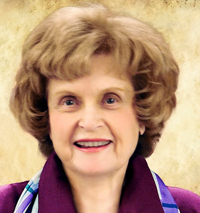
Gina Parris

Guest: Gina Parris

Contact Info: BuiltToWnCoaching.com

About Gina: Gina Parris is an internationally sought-after peak performance speaker and coach who has spent twenty years helping people overcome their obstacles to reach their full potential – joyfully. Her clients range from professional athletes to solo-preneurs. She is passionate about helping people balance all the areas of their lives so that their relationships thrive amid great personal and professional growth.

Music used in this podcast from stefsax and panu moon

Filed Under: Podcast Tagged With: Audio, Emotions, Gina Parris, Premium Member, Relationships, Resistance, Self Esteem, TapAlong Member

When Reward Systems Go Bad: Food As A Reward

May 29, 2009 by Gene Monterastelli


photo by Infidelic

We are all familiar with reward systems (even if we don’t use that name). “If you clean your room you can watch TV.” “I will read one more chapter and then take a walk.” “Once I pay the bills I will go get a smoothie.”

Reward systems are very effective as a motivator to get a task done, but they can also become problematic unless they are carefully created and used. Sometimes they can be created and we don’t even realize it is happening.

Here is an example of how a reward system had become transformed. Although at one time it was beneficial, it had become a problem.

My client “Linda” was trying to change her diet. For some reason she was craving and eating sweets and carbohydrates, even when she was not hungry. Normally when I encounter cravings and mindless eating it’s because the food is being used to fill an emotional hole of some sort. Even though that was my assumption I knew we needed to check in with her system to see if this was the case.

After doing a few minutes of investigation using a guided imagery technique and a parts technique it became very clear that the food was being used as a reward system. Every time she did something good she got to eat something that was sweet.

But this is not how things were playing out.

She was having these cravings in the evening when she was watching TV. These cravings weren’t coming after she had done something that deserved a reward.

With a little more investigation it became clear that the evening was her lowest emotional point of the day. This was her least busy time, and therefore she was free to let her thoughts wander to all the limiting beliefs she had about herself as well as to her worries about her life.

This is when the reward system kicked in, but it did it in reverse. It started to work like this:

  • When I do something that is good it means I have value as a person
  • I get a treat when I have done something good
  • The more treats I get the more good I must be doing
  • The more good I am doing the more value I have
  • If I am eating lots of treats it must mean that I am really good and have lots of value
  • I am feeling bad about myself so I am going to have a treat because the only reason I would get a treat is because I have value

This is a really subtle shift. All of a sudden treats go from being a reward to becoming a way to feel better.

Through another technique we are able to take the reward system and transform it into a more useful resource.

Lessons form this session:
1) Your expectations can be wrong
Because of my past experience I had a strong belief why a particular action/belief was happening. I was wrong. Just because we believe we know the cause and effect doesn’t mean we do. Even when you are certain you know why a belief exists, ask the system for information. We think we know, but the body truly does know.

2) The issues and beliefs that are hindering us exist because in some way we think they are helping us.
This is a perfect example of this fact. The reward system created to remind Linda she was doing good, may have improved her self-worth, but eating enough junk to keep her self-worth high made her feel worse because of her poor eating choices. Trying to understand why it was being helpful, we came to understand the issue and transform it. If we had approached it from the point of view of, “It’s bad. It must be eliminated”, we never would have understood why it existed, making the fast transformation an impossibility.

3) Resource that were once helpful might not be helpful today
Our point of view changes, our lives change, and our circumstances change. For this reason we need to revisit why we act the way we do to see if it’s still serving us.

Filed Under: Sessions Tagged With: How To, Reward, Transform, Weight Loss

  • « Go to Previous Page
  • Page 1
  • Interim pages omitted …
  • Page 283
  • Page 284
  • Page 285
  • Page 286
  • Page 287
  • Interim pages omitted …
  • Page 311
  • Go to Next Page »

10 Steps To Stop Self-Sabotage

Get your FREE 10 step guide to using EFT to stop self-sabotage in your life.

Search Tapping Q & A

Meet Gene Monterastelli

Gene MonterastelliGene Monterastelli is a Brooklyn based tapping practitioner. In addition to working with individual clients and groups, he regularly writes and records about how to use tapping to move from self-sabotage to productive action.
Gene’s Full Bio & Services


Subscribe via: Apple Podcasts | Google Podcast | Android Phone | Spotify | Pandora | Amazon Music | Audible | iHeart Radio | Castbox | Alexa | Stitcher | TuneIn | Deezer | aCast | Himalaya | Overcast | Luminary | RSS
Visit the complete Podcast Archive

Apple App | Google/Android App


This book is not just about EFT and tapping for anger. The book contains some of the most comprehensive step-by-step tapping tools that can be used for all emotions and can be added to your tapping tool set right away.

For every book purchased, four inmates will also receive a copy of the book.

For every book purchased 4 inmates will also receive a copy of the book.

Paperback | Kindle Version

Copyright © 2026 · Refund Policy · Terms of Use· Privacy Policy