Because we are human we will make mistakes, which can feel frustrating, overwhelming and embarrassing.
We end up judging ourselves, often way too harshly.
Today we are going to tap for being OK with our past mistakes, while at the same time taking responsibility for those mistakes.
Thanks for taking part in the November 30-Day Tapping Challenge!
Don’t forget to sign up to receive daily reminders so that you don’t miss a day of tapping.
If you liked today's video, please share it with a friend.

 When life is going well, we do not tend to notice all of the many aspects of our lives that we do not control.
 Because of everything going on in the world at the moment, my theory is that we are all paying a 20% energy tax from the moment we get up. It's as if we are losing 20% of our energy before we have even started the day because of the underlying feelings of worry and overwhelm.
 There are times when things go wrong and then there are times when things REALLY go wrong. The week of recording this podcast my website was down for a number of days and I was unable to access my email.
 Many of us have a love/hate relationship with social media. One one hand I genuinely love how easy social media makes it to stay connected to my friends and family from all over the world. It's great to be able to see what they are up to. I love seeing their kids grow up and I love being able to share a joke across the country and across the world.
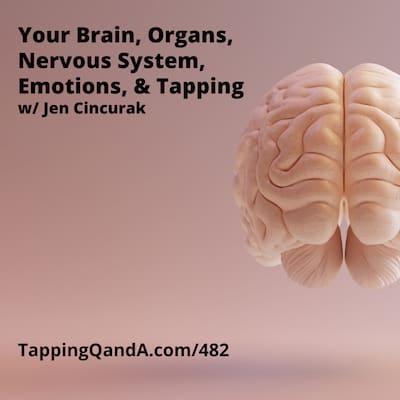 The more time I spend studying the human body, the more its complexity amazes me. We are a combination of biological functions, thoughts, beliefs, memories, and an entire pharmacy of biochemistry that is released and absorbed by our bodies based on a whole host of factors.
 Guest: Jen Cincurak
 The most common reason that most people don't tap on their own is because they don't know what words to say. Nearly everyone is taught to tap using words, so this preoccupation is understandable.
  You have been there before. You're trying to make a positive change in your life, such as giving up sweets.
 When we are tapping for a specific issue it can often feel as if there is a small bit of it remaining that we can't quite put our finger on. It seems like a shadow of the issue hanging around in the background, rather than the issue itself.
  Chronic issues can be some of the most difficult to address with tapping and EFT because usually there is no obvious root cause. The physical ailments can begin months or even years after the trauma occurred and since it's hard to know when the issue began, we don't have a clear target for our tapping.
 Guest: Dr. Peta Stapleton
 Recently I have changed my mind about making bad choices. Instead of feeling frustrated with myself, I have decided to embrace occasionally making bad choices as long as I make them in a conscious way.
 Tapping and EFT are powerful tools that can be used for so many different issues it can be difficult to know exactly where to start. The part of us that wants to get our tapping “exactly right” means that sometimes we don't tap because we want to avoid tapping on the “wrong thing”.
 When we are describing ourselves (or when others are describing us) we identify with a whole host of different characteristics. You might be known as a hard worker, a caring person, a great wit, or a loyal friend.
 I like to check in with my email newsletter readers to find out what struggles they are facing with tapping so that I can create the most useful resources possible.