Trigger warning: In this email I share the story of a very intense client session that references self-harm.
Good morning,
I hope you have had the chance to listen to the podcast that was released on Wednesday. It is an amazing conversation with Mark Wolynn, who happens to be one of my favorite guests.
The podcast explores the difference between attachment trauma and generational trauma.
To start the conversation Mark shared the story of a client he worked with a few years ago. His client “Sarah” was struggling with some deep-seated emotional issues that manifested in physically cutting herself, but unlike most cutters she would cut very deeply near a major vein.
This landed Sarah in the emergency room a number of times and then in an inpatient facility, which is where Mark started working with her. The outline of Sarah's treatment was:
- Mark had Sarah hold a pen to her arm like she would a knife and asked her what she was thinking
- Sarah said “I don't deserve to live”
- Mark asked why she felt that way, and what she believed had done to merit this punishment
- Sarah couldn't find a response to that question
- With this Mark realized that Sarah's struggle wasn't about her own trauma, but rather a generational trauma that she was carrying for her grandmother who had crashed a car and killed her grandfather
- Using some of his drama therapy skills, Mark worked with Sarah and had her interact with both of her grandparents, which created deep healing
- Sarah's father came in at the end of the session and Mark and Sarah shared what they had been working on, triggering an emotional response from Sarah's father
- Mark did some more work with Sarah and her father together
AND Sarah never cut herself again.
There are two takeaways for me from this.
First, gaining a better understanding of attachment trauma and general trauma has made me a better practitioner.
Second, it is amazing to hear a skilled practitioner talk about their process. Mark is very honest in the interview about the moments in which he was trying the first thing that instinctively came to mind and when he was using a specific tool. He moves seamlessly from asking good questions, to parts work, to family systems work, to generational healing.
When I use the term “art of delivery” this is exactly what I am talking about, because being able to tap in that way doesn't happen by accident.
Mastering the art of delivery is the ability to understand how the healing process works, where the client is emotionally in the moment, having multiple tools at your disposal for uncovering information around the issues, and then being able to tap in the most effective way.
That is why I created the Mastering the Art of Delivery training.
Even if you never find yourself in a situation where you are working with someone in such acute distress as Sarah, the better you are at the art of delivery, the better results you will see when tapping with clients or on your own.
I am offering this training four times over the next few weeks. Each weekend has a different start time to accommodate people in different parts of the world, so that everyone can take the class in daylight hours:
- August 22nd and 23rd – Eastern North America and South America
- August 29th and 30th – Western North America
- September 5th and 6th – Asia, Australia, and New Zealand
- September 12th and 13th – Europe, Africa, and the Middle East
You don't have to go to the weekend that is geared for your part of the world, just choose whichever one works best for you.
You can find full details on the training here: http://MasteringTheArtOfDelivery.com
Use the discount code “art” for 50% off.
As of the writing of this note there are only 4 seats left in the first weekend.
This is your opportunity to move from having tapping work for you to using tapping in a way that takes less effort, is quicker, and creates longer lasting results.
Sign up use the discount code “art” for 50% off: http://MasteringTheArtOfDelivery.com
If you have any questions about the training, please let me know.
Gene
PS: If you would like to take the class, but need to pay for it with a payment plan, please let me know. We can work out something that works for you.
 In the most basic terms it means that if one of our parents has a fear of water because of a traumatic instance in their life it is very likely we will have the same fear because it is in our DNA.
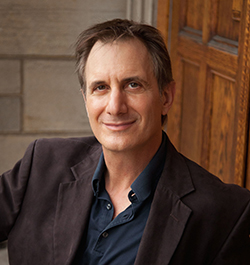 Guest: Mark Wolynn
 Especially for beginners, and sometimes for more skilled tappers, knowing what to say and where to start is often the part of tapping that trips people up.
 The two most common questions asked by those new to tapping are “Does tapping work?” and “How do we know tapping works?” As someone who loves tapping, it's great that I can share my personal first hand experience of tapping, but for some people it just isn't enough.
 Guest: David Feinstein, PhD
 One of my favorite parts of the tapping community is people's willingness to share their experience and expertise. A few months ago I sent an email to a number of practitioners I admire and asked them if they would be willing to share their wisdom about the following:
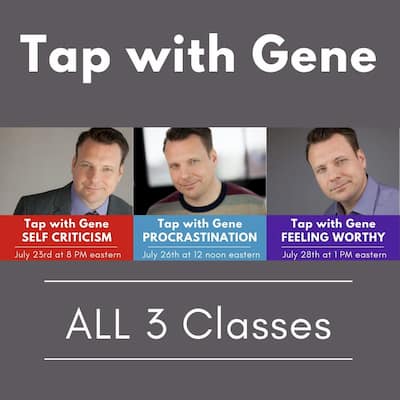 Over the last few weeks I have been doing a number of interviews for the Tapping Q & A podcast. Even though it wasn't the topic of the interview, on five different occasions the same issue came up. All five practitioners talked about how their clients wouldn't tap because they didn't know the words to say.
 When we take an action we usually have an expectation about how it will work out. When I order lunch, my expectation is that the food will be tasty. When I launch a new product in my business, I expect to reach certain sales goals.
 As someone who knows a lot about tapping, it's natural to want to share that knowledge with others, but sometimes we don't have the opportunity. This is especially true when dealing with a crisis in the moment, when we are working with children, or both.
 Guest: Jondi Whitis
  One of the human experiences that cuts us the deepest is being ignored or dismissed as unimportant by whose attention we most want. The pain can come from being ignored by our friends, our family, or any one important in our life.