• Skip to primary navigation
  • Skip to main content
  • Skip to primary sidebar
  • Skip to footer
  • Leave A Tip

Tapping Q & A with Gene Monterastelli - Get the most out of tapping and EFT

  • Learn Tapping
  • Podcast
  • Video
  • About Gene
  • Work w/Gene
  • Archive
    • Every Post Ever
    • Q&A
    • Podcast
    • Videos
    • Tools
    • Tap Along
    • Sessions
  • Events
  • Contact Us

Why Do I Have To Tap? – How Is EFT Different From Just Thinking About The Issue?

July 23, 2011 by Gene Monterastelli

This article was written while powered by a few glasses of iced coffee bought by Frankie Collins of Seattle, WA . Thanks Frankie!

Is it necessary to have the intention of releasing or letting go a negative thought, feeling, or physical pain while tapping? I am trying to understand why fretting, stewing, or worrying about an issue consciously doesn't dissolve the negative emotions, but tapping while expressing it does.


photo by CARF Brazil

There are three distinct concepts relevant to the questions you are asking. When you understand all three and how they fit together it is easier to understand how Emotional Freedom Technique (EFT) works. The three concepts are tuning in, tapping, and intention.

By getting a handle on these, it is easy to understand how the thoughts and emotions related to our past experience affect the present, and how EFT affects them.

We create models of the world in our minds to help us predict how the world works. By having these models we don't have to analyze how everything in our experience works. For example, when a server places a glass of ice water in front of me at a café I assume the water is going to be cold. I have experienced lots of glasses of water. When I see ice cubes present I assume the water is cold. As I bring the glass to my mouth I don't worry about burning my tongue. Because of the models I hold about water, ice, and cafés I don't give the water much thought.

Is it possible that the water is going to be lukewarm? Sure, but that is only disappointing, not dangerous. Is it possible that the water is scalding hot? It is possible, but so highly unlikely that I don’t have to worry about it.

The models I hold of the world save me time. By knowing what not to spent time and energy thinking, I can concentrate on what needs my attention.

But there is a flaw in this system.

It is possible that I hold inaccurate or incomplete models of a situation.

Let’s pretend that as I am writing this, a mouse runs by where I am sitting. Without stopping to think about it I react by I jumping up on the table and screaming like a small child. In this scenario I haven't given what has happened much thought. I just apply the model I have. In this case my model tells me that mice are terrifying and dangerous creatures, I am unsafe, and I need to run for my life.

The model has done its job. My model of mice was applied to the current experience and I acted without having to think. The issue is that mice aren't deadly creatures. In this case the model has not served me.

Now that we understand how models of information work, lets take a look at how we use EFT to affect these models.

If I were to use EFT to work on my fear of mice, the first step would be to into that fear. I could just imagine a mouse is running under my chair and my heart would start to race. When I tune into an issue, I am accessing a model of information. I think, “mouse under my chair,” and the model is applied. This is what we do when we are worrying about an issue. We are just accessing the models we hold but we aren't making any changes to the model itself. When we access that same model in the future the same feelings will result.

The next step in EFT is to start tapping on the issue. We know from the theory of EFT when we are thinking a thought that is not in line with health and wellbeing, the energy system of the body is in some way out of balance or disrupted. Every time we apply an inaccurate model to a scenario we are creating this state of energetic imbalance. By tapping we bring the system back to balance. This is the reason we feel better about after tapping.

The amazing part of EFT is that as well as bringing the system back into balance in the moment, we are changing the model by replacing the inaccurate information with information of health and well-being.

By changing the model, the next time it is referenced, I respond more appropriately. In our example:

  • I think about my fear of mice.
  • I use EFT to bring my system back to the balance which is its natural state.
  • As the system returns to balance the model is corrected.
  • The next time I see a mouse I apply the updated model and am not terrified.

EFT is a mechanical process. Tapping while you are tuned into a model will correct some or all of the inaccurate parts of that model. Since EFT is a mechanical process, if you do the steps correctly improvement will result.

This brings us to the third part of the question. How is intention involved in the healing process with EFT? As we have just shown, if the protocol is applied correctly, it doesn't matter if you have the intention for release. I have done EFT with a number of skeptical people. They didn't believe EFT was going to work and it did. But it did so because they fully engaged in the process. This is not a small point.

If you do not have the intention for release and health it is more likely that you will not use the protocol correctly. Remember that the words we use are not magic. The words help us to tune into an issue, but it is possible to say words, “this fear of mice…this fear of mice..this fear of mice” and to be thinking about what is on TV tonight and not mice. Even though it looks like I am doing EFT correctly, I will not make progress.

So intention is not a prerequisite for EFT to work, but I encourage all my clients to hold the intention of moving towards health and wellbeing because it helps them to stay focused and on-task.

A few thoughts to keep in mind:

  • We hold models of how the world works to make the world easier to navigate.
  • It is possible to have inaccurate or incomplete models of the world.
  • Simply activating these models will not change them.
  • If we tune into our inaccurate or incomplete models of the world while tapping we can correct those models.
  • Intention is not a requirement for EFT to work but it helps us to use the protocol correctly.

Filed Under: Q&A Tagged With: Daily, Gold Star, How To, Negative Phrases, Phrases

Overwhelmed By Emotions While Using Tapping/EFT: Preventing it from happening and dealing with it if it happens

July 16, 2011 by Gene Monterastelli

I have so many emotions and memories coming up all at once that I’m overwhelmed by them. It feels like they are queuing up to get fixed! Yes, I’m glad this stuff comes up and I deal with it as it comes, but issues are tumbling out so fast they are landing on top of each other. I can’t spend all day in the bathroom at work! How do I deal with all these emotions without being so overwhelmed?


photo by Ashley Pollak

I have heard of this experience from a number of my clients. It is much like stirring up pond water. The water looks very clear, but the moment you start poking around in the water the sediment from the bottom clouds the water.

We can be very unaware of all the emotions and memories we are carrying around. When we start to poke around with healing work we can stir the pot and find much more than we bargained for.

I have two recommendations, one before you dive in and one for those moments when you’ve stirred up more than you bargained for.

Preventing Feeling Overwhelmed By Your Feelings

One of the benefits of Emotional Freedom Techniques (EFT) is the fact that we are able to slowly creep up on a problem while still doing effective work. Some techniques and therapies require you to dive into the deep part of the pain before you can start healing. It is possible to use EFT in this fashion, but I’m not a big fan of this approach.

I’m not a fan of feeling pain for the sake of pain. Why do healing work in a very painful way when you can do it in a much gentler way? A perfect example of this is how we can use EFT to deal with an individual’s fear of being in high places.

We could blindfold someone, not give them a clue as to the intent, transport them to the top of a 67-story building, let them freak out and start to do EFT.

Is it possible to be successful like this? Maybe, but we’d cause a lot of undue pain in the process.

When I work with someone who has this type of fear we start in the suburbs. I tell them that in just a little bit we’ll be going downtown to the top of the tallest building. For someone who fears heights this will cause the anxiety level to rise. We deal with this anxiety by doing EFT.

When they are at ease with the thought of heading downtown, we move to the car. In most cases their level of anxiety again rises as the time of climbing to the top of the building comes nearer. Again, we do EFT to deal with the anxiety. Once the anxiety is gone we start to drive downtown.

We repeat the process as many times as necessary, stopping to use EFT every time the anxiety gets above a 5 until we reach the top of the building. If this means we have to stop the car every 10 minutes and do EFT with each step we take toward the elevator, we do it.

Can this take a great deal of time? Yes. Is it a safe way to heal? In my mind it clearly is.

I recommend that whatever issue you are working on you creep up on it as gently as possible. By doing this you are going to more readily prevent yourself from going on tilt. I am in favor of erring on the side of caution even if it means that the healing takes a little more time.

When The Overwhelmed Feeling Strikes

Sometimes we can’t prevent feeling overwhelmed by emotions and memories. We might stumble into issues we had no idea were there as we do healing work, or circumstances in life may arise that catch us completely off guard.

We know that EFT is most effective when we can take memories one at a time and emotions from those memories one at time. When we feel unexpectedly overwhelmed it’s often difficult to do this. There is simply a whirlwind of emotions and/or memories all coming to the surface at once. Trying to separate these emotions or memories is like trying to separate one raindrop from another in a rainstorm. There might be a fleeting moment where you can see a single drop, but a moment later it is lost into the storm.

When this happens I go through a few steps to calm the storm.

1) Deal with any emotion that you have about being overwhelmed.
Once we know that we are supposed to break memories and emotions to effectively clear them it can be frustrating when we aren’t able to break them down. If there is any frustration about being overwhelmed that is the best place to start. The more frustrated you are, the less clearly you’ll see the issues at hand. As you tap give yourself permission to take this slowly; remember it’s okay not to know everything at once.

Tap on:

I know EFT works better when I can break things down…right now the emotions are coming all at once…I don’t know where to begin…and I feel like I am never going to get clear of all of this…but I don’t need to be frustrated or overwhelmed…I will be able to use EFT to take it apart a bit at a time…by taking it apart a bit a time it is going to manageable…as I break it apart it is going to be easier and easier to manage…I give myself permission to take this slowly…it’s okay that I don’t know everything that is going on…[How to use these tapping phrases]

[Side Note: You might also want to take a look at this article on the fear of fear.  Sometime we feel overwhelmed because we are afraid of what we are going to find.  If that is the case I think this is a very helpful approach: Fear of Fear]

2) Paint a picture of all the emotions at once
Since we are unable to deal with the emotions one at a time we might as well go after them all at once. Again, this is going to be a bit of a gross approach, but the goal of this step is to help us get some clarity so we can start picking the emotions apart.
In this step tune in to all the emotions you are feeling at once. Create a picture in your mind’s eye. Is it something inside of you or surrounding you? Is it a weight that is on you or something swirling around you? Is it a mist, a fog, or a storm? Or is it something completely different?

It doesn’t matter what your mind’s eye leads you to, just tune into that image. What color is it? What shape is it? How much does it weigh? What is it made of? Treat this image exactly the same way you would tune into a physical pain.

Now start to tap. At first, just tune into all the characteristics of the image you have just created. As you move from tapping point to tapping point move to a different characteristic — the color, shape, size, weight, where it is. Just keep tuning in.

As you do this you will notice the storm of emotion is losing its intensity.

3) Change the image into what needs to happen next
After spending a little time tapping with the image you have in mind, it’s time to change the image. You will either turn it into something new, get rid of it, or destroy it.

If it’s a tornado, see it move off the into the distance. If it’s a fog or mist, see the warm morning sun melt it away. If it’s a haze hanging in the air, see environmental engineers with air filters suck the polluted air into air filters, leaving pure air. If it’s goo in your chest, see little street cleaners work the area over and clean it up. If it’s a heavy metal weight on your chest or shoulders, see little workmen with jackhammers breaking it up.

While doing this, just keep tapping. How you change the image doesn’t matter, but change it for the better. Ask yourself the questions, “How could I make this feel better?” and see it happen.

As you do this you are going to find that you are more relaxed, your issues seem smaller, and you can start picking the individual emotions apart.

Conclusions

The beauty of EFT is we don’t have to feel a great deal of pain for it to work.  We can creep up on any issue we want to work on.  There are going to be times when we become overwhelmed with emotions.  When this happens we can still do work.  We can:

  • deal with the frustration of being overwhelmed
  • group all the emotions together
  • bring their intensity down as a group giving us the space we need to break the emotions apart into manageable pieces.

Filed Under: Q&A Tagged With: Awareness, Fear, Phrases, Why

When Unexpected Things Come To Mind

July 13, 2011 by Gene Monterastelli

When I am tapping all sorts of things come to mind. Sometimes the memories are clearly connected to what I am tapping on. Other times they are thoughts about memories and people that seem to have nothing to do with what I am tapping on. What should I do with these thoughts?


When I am working with a client during an Emotional Freedom Techniques(EFT)/tapping session, typically the first question I ask them after a round of tapping is, “What came to mind as we did that round of tapping?”

You will notice I ask this question before I ask how much relief they’ve felt or what their SUDs level is. I do this because I believe the thoughts that come to mind during a round of tapping contain more important information than the level of relief.

Real relief is going to last and we will be able to check in on that progress in a moment, but the thoughts that have come to mind are often fleeting — so much so that frequently when I’ve asked this question my clients have said something like:

“Uh…ahhh…it was right there…now the thought is gone.”

Our thoughts and memories are not like files in a computer. Files in a computer are distinct. Each file exists on its own. It might have information about other files or be connected to specific programs, but these files are self-contained pieces of data.

Our thoughts and memories are not at all like this. They exist as complicated networks of interconnections. No single thought is contained by itself. Even when we intend to bring up a specific memory we also bring up all of its connections.

Think about the last time you let your mind wander. You might have been waiting for a friend or sitting in a car. One thought leads to another, then another, and another. It might seem random, but these thoughts and memories are all connected.

When we are doing a round of tapping we tap into this network of memories and thoughts, and we usually gain information about what the truer root of a problem is.

I use the term “truer root” because there are countless times when we think we understand why we feel the way we feel, but on further investigation we find out we are wrong.

For example, I may think I am mad because a waiter brought me the wrong food, but really it’s one more example of me feeling like my needs haven’t been heard.

Also, you will notice I didn’t say “true root” because often the new information we gain gets us closer; then we find out we can get closer still.

When we are tapping on one issue, the mind/body system naturally tunes into everything that one issue or symptom is connected to. As I stated above, sometimes these connections are obvious. Other times they are not.

My favorite phrase that my clients use when I ask them what came to mind is, “I am sure this has nothing to do with what we are working on but…”

I’ve found that the less obvious the connection between a thought and the tapping issue is, the more informative the thought is likely to be.

For me this is really good news because I expect the thought to be very helpful in the healing process.

The question then comes, “What do we do with this information?”

In some cases the connection is so obvious it becomes the issue we tap on next. In other case it is not so obvious. When I get information while tapping that has nothing to do with what I am doing work on I do two things.

First, I make a note of the thought, memory, or person who has come to mind. I don’t want to disturb the work I am doing right now, but I also don’t want to lose track of this new information.

Second, when I return to the new information, if I still can’t figure out what it means, I will tap on something like this.

During my last tapping session a piece of information came to mind…I have no idea what it means…or why it would come to mind while I was tapping on that issue…the new information might be very helpful in my healing path…I would love to know why this information came to mind…but I give myself permission to know that when I need to know what it means I will know what it means…I would like to know sooner than later…but I trust my body will give me the information I need to heal when I need it.
[
How to use these tapping phrases]

Often it becomes very clear why that information has come to mind before I even end those few phrases. But even if it doesn’t, by the time I’ve finished that patter I am comfortable not knowing right now.

The way our thoughts and feelings are interconnected makes it very easy for us to dig our way to deeper roots and connected problems by simply paying attention to what is coming to mind as we tap. With all things, it is important that we be easy with ourselves as we are tapping. Don’t get too wrapped up in figuring out what it is — just enjoy the healing process.

Filed Under: Q&A Tagged With: Awareness, How To, Phrases

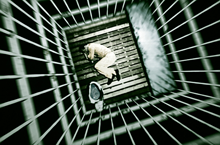
10 Lessons Learned From Teaching Tapping in Jail

June 25, 2011 by Gene Monterastelli


photo by Bernardo Borghetti

For the last few months I have been blessed to be spending my Monday and Wednesday mornings in the local county jail helping out with the Advanced Anger Management class. It has been an amazing experience.

Recently I ran into my friend whose place I have taken as assistant teacher for the class. She asked, “Isn't it addictive?” Addictive is the only way I can describe it. It is one of the coolest things I have going in my life right now.

I have learned so much from the class. These lessons are not limited to how best to use or teach tapping, but I have also learned lots of lessons about life. By first understanding these lessons it will make it easier for you to access the tools in this book.

Here are ten lessons that I learned from teaching tapping in jail:

Choice

One of my favorite things about the class is the fact that it has not been court-ordered. Everyone is in the class by choice. I will admit that a few of the guys show up because they receive a certificate of participation for their file upon completion, but even these guys fully participate.

There is no mystery about what is going on. These guys recognize that because of their anger they have made choices that have created negative outcomes and they want to change this. Sometimes they are trying to change just to avoid negative outcomes while other times they are trying to change in order to be better people overall.

Regardless of why they are in class, it is their choice. Because of this openness we are willing to push them and challenge them to look very honestly at their lives, their past choices, and their beliefs about themselves. Sometimes this is a little work, but we all need to be pushed a bit to be honest with ourselves.

Lesson 1: Healing and transformation will not take place unless it is a choice. We can’t force someone to change. We can encourage people to change and we can support people in their change work, but we cannot force someone else to change.

Safe Space

I am in awe of the woman who runs the class. She works for the county and is the one who is in charge of this class, as well as many others types of classes. She spends five days a week working inside an extremely restrictive environment trying to make the lives of a very marginalized population (both male and female) better. In her words and, more importantly, in her actions she shows how much she cares for the guys in class.

One of the main reasons the class works is because it feels like a safe space. The guys know they can talk about their issues and worries without fear of judgment or of negative repercussions. This safe and loving space exists because of the safe space that has been created with her heart.

One day the guys were asking if I am paid to teach the class. I told them I am a volunteer. When they asked the teacher the same questions she responded, “Yes, but they don’t pay me to care.” There are lots of people who the guys interact with in the facility who don’t care. She does, and it makes all the difference.

Lesson 2: It is important that the people we are working with understand that we care about them and that they are in a safe space when we work with them. Doing change work can be hard. Often we have to admit the things we don’t like about ourselves. Creating a loving and safe environment makes it easier for them to choose the steps to healing.

Other People’s Emotions

We spend a great deal of time in class working with the guys’ emotions about their relationships. These emotions fall into three basic categories. First there are the relationships that are contentious. These are normally relationships with the mothers of their children. Second, there are the relationships where they feel like they have let others down. The guys are seeing firsthand how their choices are affecting others like their parents, their partners, and their children. It is really hard to see how our choices negatively impact others. Finally, there are emotions about the relationships in which they feel helpless. Because they are incarcerated the guys can’t be helpful to their family members who are struggling with other personal problems.

As the guys have limited interaction with their loved ones (telephone, letters and occasional visits), it puts what they can and can’t control into stark relief. When we are around someone frequently, I think we misunderstand how much influence we have over someone else’s life. When we don’t have much contact with them, it becomes much more obvious just how little influence we really have.

Because of this, we help the guys to spend a great deal of time talking about and tapping for what they do have control over, which is their own emotions. (The tool we use the most is “About…To…As if…” which we will cover in Part 5 of this book.)

Lesson 3: In the end the only thing we control is our emotional response and our choices. We can’t control other people’s choices or their emotions nor are we responsible for other people’s choices or emotions. When we stop spending time and energy trying to change the emotions of others we can direct our energy to the place we have the most control: inside ourselves.

Twice A Week, Every Week

It is easy to pick out specific moments about the class to rave about. There are moments where there are amazing breakthroughs. There are great unplanned conversations about life where the guys wrestle with the really tough questions. As wonderful as these moments are they don’t happen all class long and they don’t even happen in every class. There are classes that feel long. There are times where the guys look at me bored, because I am sure they are bored with me.

Even though each class isn’t amazing they create a cumulative effect. By being there twice a week every week, it helps to build a relationship. The more we show up, the more the guys trust us and trust the tool set. Sometimes it takes weeks before one of the guys will open up in class, but it is because of the constant contact and relationship that the opening-up eventually happens.

Lesson 4: Not everyone will trust us and start tapping right away. Sometimes we have to prove ourselves and our commitment to them over time. This does not mean that we run people over with our care, but it is important that we demonstrate that we are there for the long haul.

What is that word?

Recently I brought to class a list of emotions that was created by The Center for Nonviolent Communication . The goal of the list is to help the guys develop a more specific vocabulary in describing how they feel. The more specifically we can describe how we feel, the easier it is to change how we feel.

When printed, the list is two pages long. After I handed out the list to the guys I started to explain why I had given them the list. As I was finishing “K” just blurted out, “What does this word mean?” He then asked about another and another and another. K is in his late thirties and is comfortable enough in his own skin that he wasn’t concerned what I (or his classmates) thought about the fact he didn’t understand something. His learning was more important than that.

I wish I could always approach learning in the same way.

Lesson 5: It is OK to admit that we don’t have all the answers and it is important to let others know that it is OK to ask for clarification when needed. If we remain in the dark we will not learn and we will often feel stupid because we don’t know, which in turn shuts down the learning and/or healing process.

Filling The Tool Box

There are lots of reasons why guys don’t make it to class. It could be the unit’s day to go to the library, they could be meeting with their lawyer, they could be in court, or something could have happened overnight and their unit is in lockdown so that no one can leave for any reason.

Because of this reality it is hard to teach concepts that build upon previous work because you never know who is going to be there and which classes they have already attended. To combat this I have broken down all the topics down into discrete parts. Each part contains two pieces: a tool that can be used right now and an explanation of how it fits into the big picture.

“Ten Steps To Tap For Any Emotion” is a perfect example of this approach that I created for class. If you know the tapping points and follow the steps you will find relief. When working with the guys I presented the steps one at a time and had them write out their answers for each step.

After they completed the whole process we spent some time talking about how and why the process worked. We talked about the importance of each step and how it impacted the overall results.

In the end it didn’t matter if they understood any of the big picture stuff. Of course understanding the big picture makes using and customizing the tools easier, but if the tools are understood and used regularly they will bring healing, and that is what is most important.

Lesson 6: Don’t give people concepts and theory. Give them tools they can use right now to improve their lives. If they are interested in theory they will ask about it. It is more important for someone to regain control of their life than it is for them to be able explain what is happening on an energetic level when someone is experiencing psychological reversal. This book is put together in such a way that you don’t have to understand any of the concepts to be successful. If you work the steps you will see change.

Class Time

Because of the nature of the facility it is hard to get the guys to class. They come from as many as ten different units, many of the inmates are not allowed to move through the facility on their own, class lists need to be submitted ahead of time, keys need to be checked out by officers, and the classroom has to be unlocked. There are an amazing number of moving parts and because of this we have two hour classes twice a week. This is so we can get a maximum amount of time in class with the least amount of disruption to the facility.

To be honest, two hours is a really difficult length of time in which to teach. It is just a little too long to go straight through and it is too short to take a break. It can be hard to hold the guys’ attention and sometimes I find it hard to keep my energy up as a teacher for two straight hours. Also, the class is at 8:30 am so many of the guys have just rolled out of bed and aren’t yet fully awake.

Lesson 7: When you are doing this type of work it is important that you don’t try to do too much at once. It is best to set aside a time each day to do this work instead of trying to do everything in one go. If you teaching this type of class it is important that when planning your material you keep in mind how long people can stay focused, how long you can teach, and the energy level of the room based on what has come right before class. If you are going to be teaching for a large chunk of time, switch from direct teaching/lecturing to providing experiential/hands-on activities in order to keep everyone focused and energized.

Breathe In And Hold

Tapping in public can be a little bit embarrassing. Let’s be honest, it does look rather silly. You can only imagine how much harder it must be to tap in jail! There is no privacy, your reputation can be very important, and you definitely don’t want to look foolish.

At the beginning of one of the classes I asked the guys how it was going and if they were tapping back in the unit on their own. One of the guys said that he wasn’t tapping, but he tried one of the “breathing thingies.” (At the beginning or the end of most of the classes we do a guided imagery or breathing exercise. He was referring to one of these.)

He said that he was having a really hard time falling asleep because the jail is never quiet. There is always someone talking or something banging. Not being able to fall asleep really agitates him. He said that doing one of the breathing exercises calmed him enough to fall asleep. He then apologized for not tapping.

I told him that it didn’t matter if he tapped or not. What was most important is he recognized what was going on, reached for a tool that he thought might work for him, and then used it. That was all I could ever ask for.

Lesson 8: It is always about doing what makes sense and is useful. It is never about the toolset. I would love it if everyone in the world learned to tap, but I would love it even more if everyone were willing to take responsibility for their own healing and do something about it. It is easy for us to get wrapped up in getting people to tap because it has been so effective for us. We shouldn’t let our love of the tool get in the way of other people’s healing. When working through this book you will find things that work for you and things that don’t. Do the ones that work for you.

If You Have Time In Your Busy Schedule

One day in class I was introducing a tool that would take less than ten minutes to work through. I turned to the guys and said, “Sometime in the next 48 hours I would appreciate it if you could find some time in your busy schedule to carve out five or ten minutes to try this on your own.” They all looked at me stunned and then broke out laughing.

Lesson 9: It is good to be honest about where you are. It is not a mystery that the guys are in jail, that they have limited freedom, and are wearing colored jumpsuits for a reason. They know they are in jail. I know they are in jail. Being honest about where we are and what is going on gives us the greatest chance for healing. As you engage in the tools in this book remember you are not being graded and no one will see your answers. This is about you and your healing. The more honest you are about what is going on, the more likely it is that you will effect change and transformation.

Lesson 10: Just because something is grave doesn’t mean it has to be serious all the time. There are lots of things that are both serious and important, but I have found in my own life that if I lose my sense of humor in the serious moments I am more likely to feel overwhelmed. It is ok for us to laugh. Gallows humor can be very helpful and healing. Don’t be afraid to joke about what you are going through. There are times where joking about how far you need to go will help your healing process.

* * * *

I have learned so much by being stretched by these guys. It has forced me to rethink the way I teach and what I can learn from the classes I teach. I hope you are willing to stretch yourself a little and share tapping with someone outside your comfort zone.

If you do I would love to hear how it goes in the comments below.

Filed Under: Q&A, Tools Tagged With: Jail, Lessons, Teaching

Layers of Resistance

June 8, 2011 by Gene Monterastelli

This article was written while being powered by a few cups of coffee bought by Judy Fay of Ireland. Thanks Judy!

I know that I need to spend time tapping on my issues, but I can't seem to get myself to do it. After the fact (of not tapping) I feel a lot worse because I haven't done the Emotional Freedom Techniques (EFT)/tapping that I know works. Is there any way I can get over my block about sitting down to tap?

There are lots of reasons that we don't sit down to tap. We can be afraid that we are going to open-up something that is too big to handle on our own, we don't like stepping into negative emotions, or we are afraid that it is not going work.

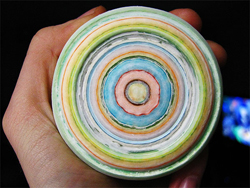
I have found that there are many layers to our resistance that prevent us from sitting down to do the work. In a lot of ways these layers of resistance remind me of the Everlasting Gobstopper from the Wonka candy company. (The photo is a cross-section of a giant Gobstopper-like candy cut in half.)

A gobstopper is a hard candy that has a number of different colored and flavored candy shell layers surrounding a sweet-tart center. As you suck on the candy each colored shell melts away to reveal a new color and flavor. In the end (assuming you don't just bite through it) you end up with a nice treat in the sweet-tart.

The way in which I see this as an analogy for our work and resistance is like this…

The sweet-tart candy center is the root cause of the issue we are working with. It is the part we need to get to, but there are a number of different types of resistances that can prevent us from getting to the root cause. As we deal with one type of resistance it reveals the next layer of resistance. It is easy to see this next hard layer of resistance being too much to even try to resolve. Each layer of resistance creates another chance for us to give up.

If you find yourself struggling to sit down to tap on a particular issue you might be struggling with resistance to doing the work. An easy way to deal with this is to start at the outer-most layer of resistance. If there is no resistance of this type you can move to the next layer. If you do notice a particular type of resistance, spend a little time tapping for it before moving to the next level.
The layers and tapping process might look like this:

I Don't Believe Tapping Will Work For This Issue
It is very common for us to come upon an issue that we don't think tapping is going to work for. We might think, “Sure it works for something small like craving chocolate, but there is no way it is going to deal with my low self-esteem issues.” If you don't think tapping will work for this issue then you can tap like this:

I know tapping works for some issues…I have even felt it working in my life…But when it has worked before it was on something really small…the issue I need to tap on now is too big or too complicated for tapping to work…I don't want to waste my time on something that won't work…tapping for something that I know is too big is just a waste of time…I hate spending time on an issue and not making any progress…I feel like a failure…but I know that even if it doesn't provide complete relief it is worth my time to begin to deal with the issue…a small amount of progress is valuable…and if I make a small amount of progress today…it is going to give me something to build on…Bit-by-bit I will make progress…and I know that even if it doesn't work…it is only a small amount of time to try…If it doesn't work I can try something else…but I am willing to give it a few minutes of tapping.

I Don't Believe Tapping Will Work For Me For This Issue
The next layer of resistance is very much like the first, but it is a slightly different flavor. This resistance is much more personal. It is not that tapping won't work for the issue, but tapping won't work for me for the issue. When we believe that it is too much for me or I am too far-gone for it to work for me we can tap on this:

I know tapping works…I have seen tapping work in my life…I have seen tapping work in other people's lives…I have even seen tapping work for people who have the same issue as me…but I am different…my issue is much bigger…I am much deeper in my issue…I don't have the same tapping skill as other people…It might have worked for them…but it is not going to work for me…But I give myself permission to know that I am not different from others…My issue might feel different…My issue might feel bigger…My issue might feel stronger…But I know that if tapping works for someone else it can work for me…I might have to approach it in a different way than someone else…I might need to spend a little more time than someone else…but I know that tapping can work…and I just need to spend a little time working at it…to figure out the best way to do it…Tapping has worked before…and it will work again for me…and it will work for this issue.

It Is Too Big and I Don't Know Where To Start
Tapping for a craving or a sore muscle is an easy thing. We know exactly what to tap on. There are many other issues that are much bigger, like having low self esteem, that are knit into every part of our lives, and so we don't know where to start. Because there is not a clear starting point, we just don't start. If this is the case, we can tap on this:

The issue I want to tap on feels so big…It touches so many parts of my life…and it runs so deep…because it is so big I don't know where to begin…It is like trying to pick up a four-foot-high pile of clothing…There is just no way to get it all at once…It is big and unmanageable…I feel that if I try to tap for this I am just going to be spinning my wheels because I won't be doing any significant work…But I choose to know that no matter where I start…it is a good place to start…because every part is connected to the root issue…By going after a bit of it…any bit of it…I am doing work on the larger issue…As I work on one small part…it is going to lead me to another small part…With each small part I knock out…the closer I am going to be to the root cause in the middle…Sure I might not find that root today…and I might not find it tomorrow…but by doing it bit-by-bit I am leading myself to working toward the root issue…I am going to be easy with myself as I try and manage the issue…A little time will go a long way…besides, this way is better – I’d rather approach the root issue slowly like this anyway…layer-by-layer…because I don’t want to suddenly come up on the root issue and get overwhelmed.

It Is Too Painful To Get Into The Specifics
Sometimes we don't want to tap on an issue because we have a good idea of how painful the work is going to be. The issue is so painful that we don't want to dive in. Why would we want to put ourselves through the pain? Because of this we don't spend time tapping on the issue. If you aren't tapping because if feels like it is going to be too painful then we can tap like this:

I know I want to heal in this part of my life…But it is just too painful…I am going to start tapping on this issue and it is going to open a whole can of worms…I am going to get lost in my emotions…It will be too much…It will make things worse…And I am going to be stuck in an emotional funk for the rest of the day…It is going to do more harm than good to tap on this issue…But I know that I can do tapping without having to dip into all the issue…I can tap without having to dive into the details…I can just tap on the outlying symptoms…and this will make a difference…Any tapping I do is good tapping…As I poke-away at this bit-by-bit this issue will begin to feel smaller and smaller…and I won't get lost in the emotions…I give myself permission to tap on the issue and know that I don't need to get lost in the emotions…and know that I can stop any time it feels like it is too much…But by knowing I can take my time, this truth will help me to go after this…Even if it is just in a small way…I give myself permission to keep myself emotionally safe.

I Don't Know What The Root Issue Is and I Am Never Going To Figure It Out
Once we get to the point where we feel safe enough to tap we can still be overwhelmed by not knowing what the root cause or root memory is. When this happens we can resist doing the work we want to do because it feels like we are going to fail. When we don't tap because we aren't sure of the root cause, we can tap on this:

I know tapping is more effective when I am more specific…I know that when I have a specific memory I am going to make progress fast with tapping…For this issue I don't know what the specific memory is…I don't know what the root cause is…Because of that I don't feel like tapping is going to help…I feel like it is going to be a waste of time…but I know that not every issue has a specific memory tied to it…and I don't need to know the core issue to start…If I spend time tapping on an issue I am going to learn more and more about the issue…The more I learn about the issue the more progress I am going to make…The more progress I make the more I am going to learn about this issue…and bit-by-bit I am going to knock the issue out…I don't have to know the root cause to make progress…I don't need to know the event from my past to make progress…All I need to do is spend time working with the parts I do know and understand…Even if all I understand is that I feel one emotion…as long as I can feel something about the issue…that is enough…The more I tap on that one part…the more it is going to open up…I will be making progress…AND I will be learning what I need to tap on next…I don't have to understand it all to tap.

The Dirty Little Secret Of Tapping On Layers Of Resistance
If you take your time and start tapping on the outer-most layer of resistance and work your way along, the next thing you know you will be working on the root of the issue. But there is a dirty little secret to the layers of resistance: The resistance is the issue!

What I mean by this is that when you are working on the resistance to working on an issue you are really dealing with parts of the issue itself. This does not mean that all we need to do is deal with the resistance, but often time the resistance to doing the work is 70% of the work that needs to be done.

Again if we go back to our Gobstopper analogy, the hard candy shell is a large part of the candy. The goal isn't to only get to the sweet tart center, but to also enjoy the hard candy shells as we work to the center.
The same is true with our resistance. By clearing the resistance, not only are we clearing-out the resistance, but we are clearing-out parts of the issue, leaving us with much less work when we get to the root cause.

Filed Under: Q&A Tagged With: Gold Star, Resistance

  • « Go to Previous Page
  • Page 1
  • Interim pages omitted …
  • Page 21
  • Page 22
  • Page 23
  • Page 24
  • Page 25
  • Interim pages omitted …
  • Page 46
  • Go to Next Page »

10 Steps To Stop Self-Sabotage

Get your FREE 10 step guide to using EFT to stop self-sabotage in your life.

Search Tapping Q & A

Meet Gene Monterastelli

Gene MonterastelliGene Monterastelli is a Brooklyn based tapping practitioner. In addition to working with individual clients and groups, he regularly writes and records about how to use tapping to move from self-sabotage to productive action.
Gene’s Full Bio & Services


Subscribe via: Apple Podcasts | Google Podcast | Android Phone | Spotify | Pandora | Amazon Music | Audible | iHeart Radio | Castbox | Alexa | Stitcher | TuneIn | Deezer | aCast | Himalaya | Overcast | Luminary | RSS
Visit the complete Podcast Archive

Apple App | Google/Android App


This book is not just about EFT and tapping for anger. The book contains some of the most comprehensive step-by-step tapping tools that can be used for all emotions and can be added to your tapping tool set right away.

For every book purchased, four inmates will also receive a copy of the book.

For every book purchased 4 inmates will also receive a copy of the book.

Paperback | Kindle Version

Copyright © 2026 · Refund Policy · Terms of Use· Privacy Policy