Today we spent time in Bidi Bidi Refugee Settlement, which at one point was the largest refugee camp in the world. As of 2018, it became the second largest behind the Kutupalong refugee camp in Bangladesh.
There are over 250,000 people living in Bidi Bidi who have fled the ongoing civil war in South Sudan. That is half the population of the entire state of Wyoming, where I grew up.
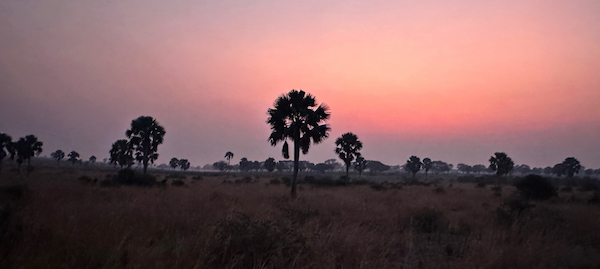
Bidi Bidi is in the northernmost part of Uganda, where the climate is hot and dry; it was over 95 degrees while we were there. Before the arrival of the refugees, there was just open land and a few small villages.
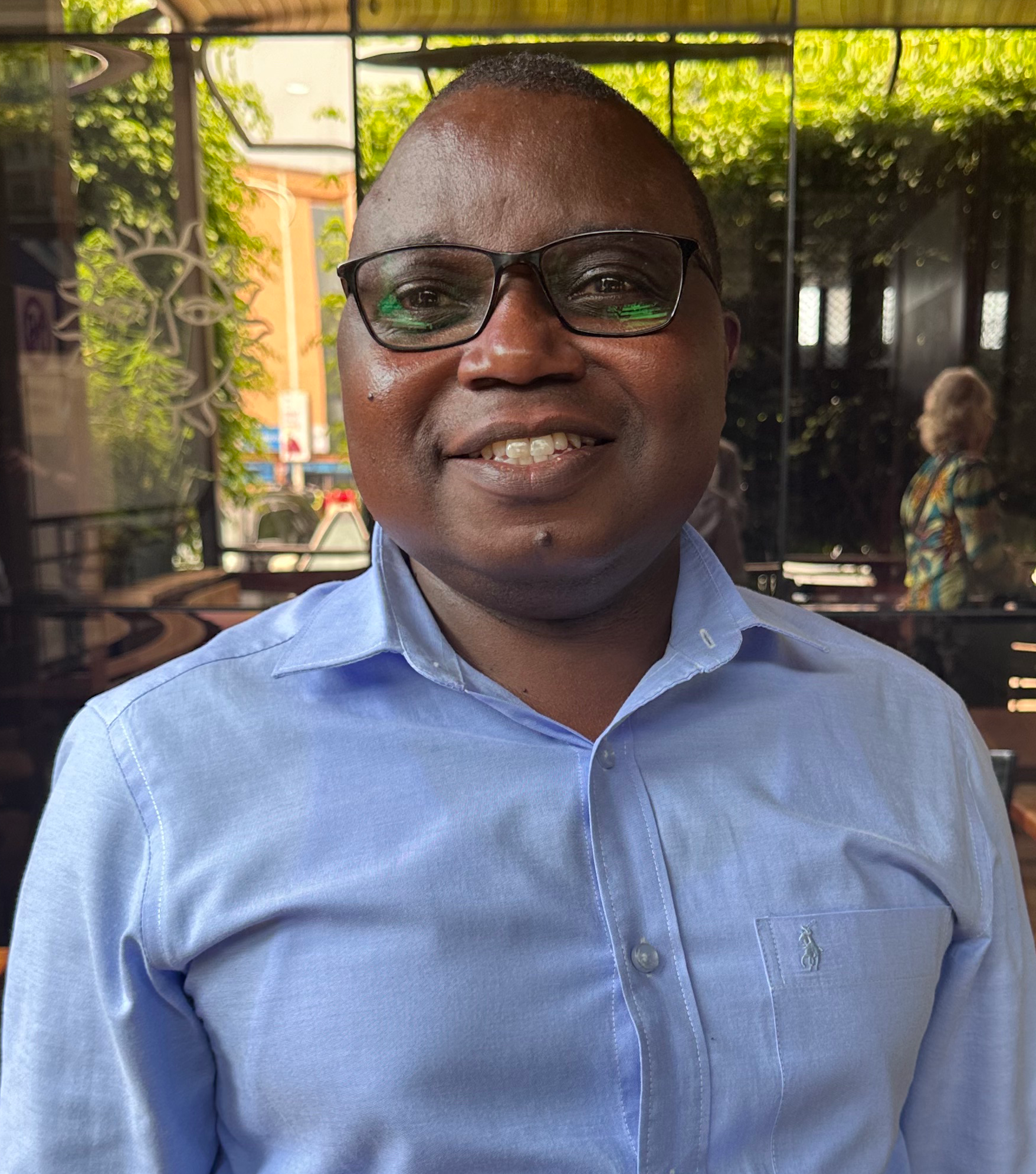
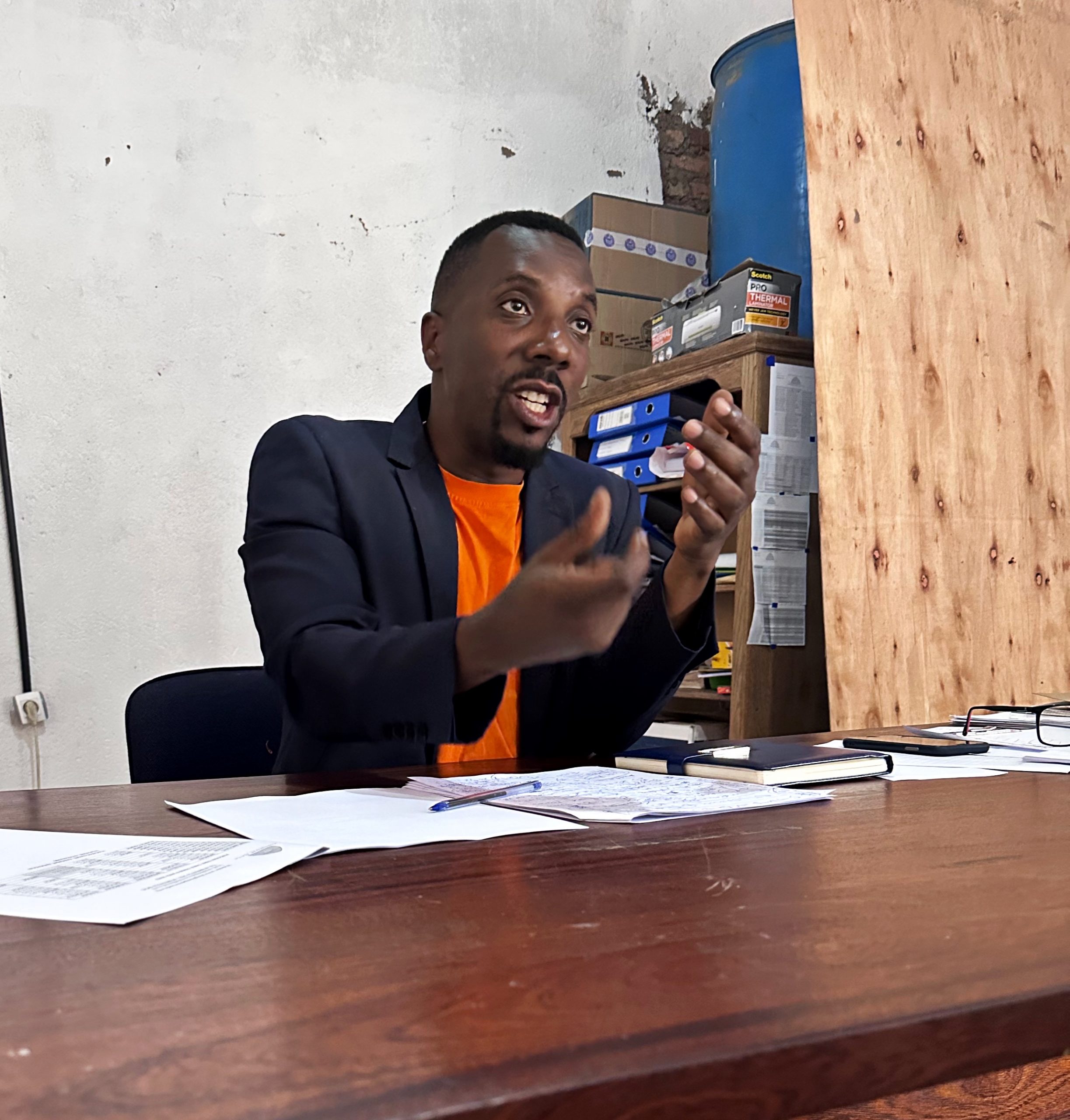
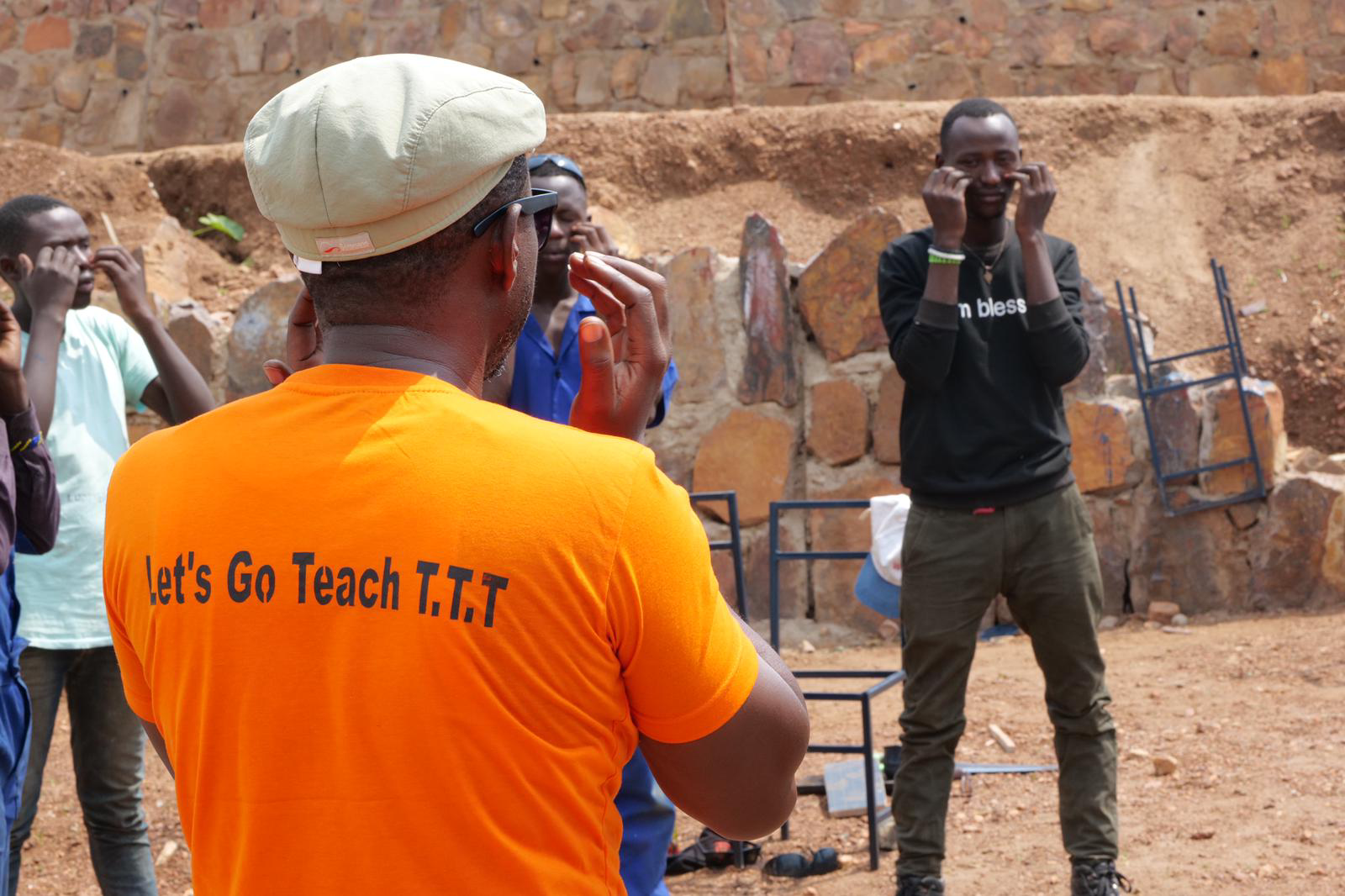
Our guide for our visit was Pastor John Obonyo. Pastor John is an amazing man who has given his life to serving the people in the refugee camp. In addition to his pastoral work, he has run over 40 tapping trainings, in which he has trained more than 6000 people in TTT, so far.
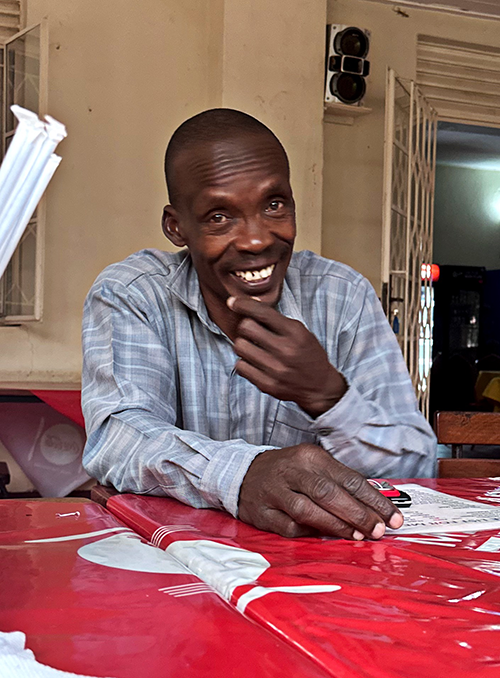
Who embraces tapping
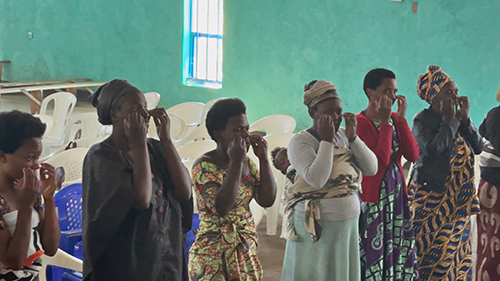
One of the most fascinating details I learned from Pastor John was how excited the local Christian pastors of various different denominations were about learning to tap and sharing it with their congregations.
The reason they were so excited about tapping has to do with something that is both spiritual and cultural. In the part of the world where Pastor John is working, there is a deep-seated fear of demonic possession. AND people fear that contact with someone possessed can pass on the evil to others. This means that people who are believed to be possessed are ostracized from society.
Pastor John shared that in many cases, people were actually struggling with PTSD or other symptoms of severe stress or trauma. When family members come to him with a possessed loved one, he first taps with them. If the tapping works, no further intervention is usually needed. If it doesn’t, he then reaches for his spiritual tools to provide help.
I find it so fascinating how much context impacts the way in which something like tapping is embraced. In the United States, in broad, general terms, one of the places that tapping is least accepted is in Christian communities because of the perception that energy work could be spiritually dangerous. And at the exact same time, the pastors of North Uganda see tapping as a vital tool to help them best serve their spiritual communities.
Presentations and reports
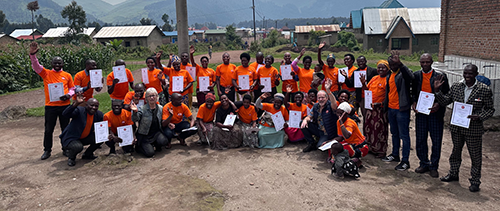
Once again, the local community shared with us personal stories of the power of tapping in their lives. I can’t even imagine the struggles of the lives of the refugees, and I continue to be astounded not just by the magnitude of the suffering, but also the overcoming of that suffering.
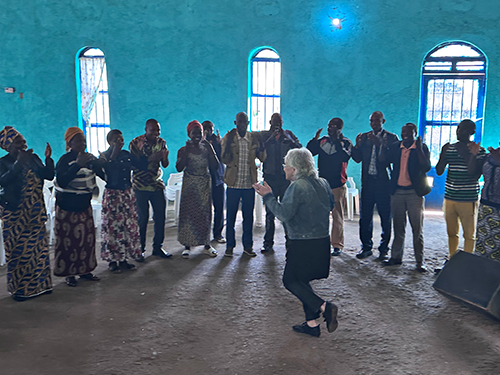
They also shared songs and dances they had created about tapping.
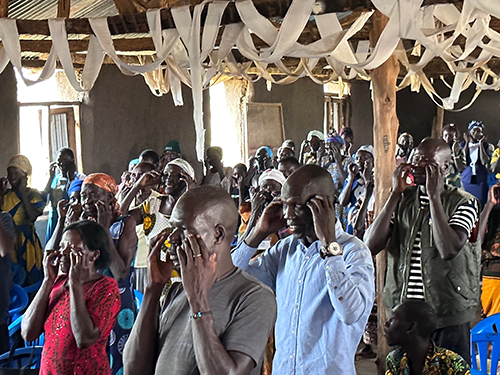
Accepting and giving dignity
One of the conversations we had with the leaders of the community was about the outside aid refugees received from the UNHCR, the United Nations refugee agency, and other NGOs. As time has passed, the amount of support has diminished. Everyone in the camps receives rations of corn, beans, and oil every month, but the size of those rations has decreased.
At the end of the presentation, Pastor John and the other community leaders insisted that we join them for lunch. It is a precarious position to hear people talking about their struggle to feed themselves and their families, which is then followed by an insistence that we join them to share a meal from their very limited rations.
In these situations the best thing to do is to say “yes” with a smile. By accepting their gift of lunch, we hoped that we also extended the dignity of allowing them to take care of us. It was a simple and tasty meal of rice, potatoes, chicken, and stewed greens.
We found it humbling to be served in such a way.
Odds and Ends
My buddy
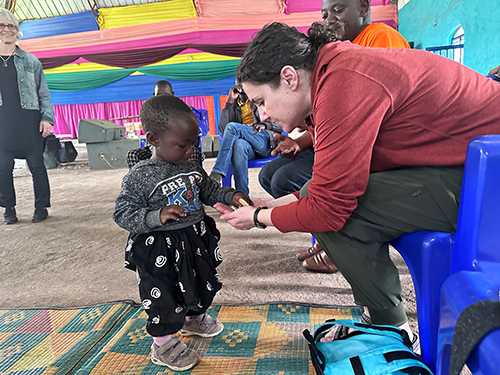
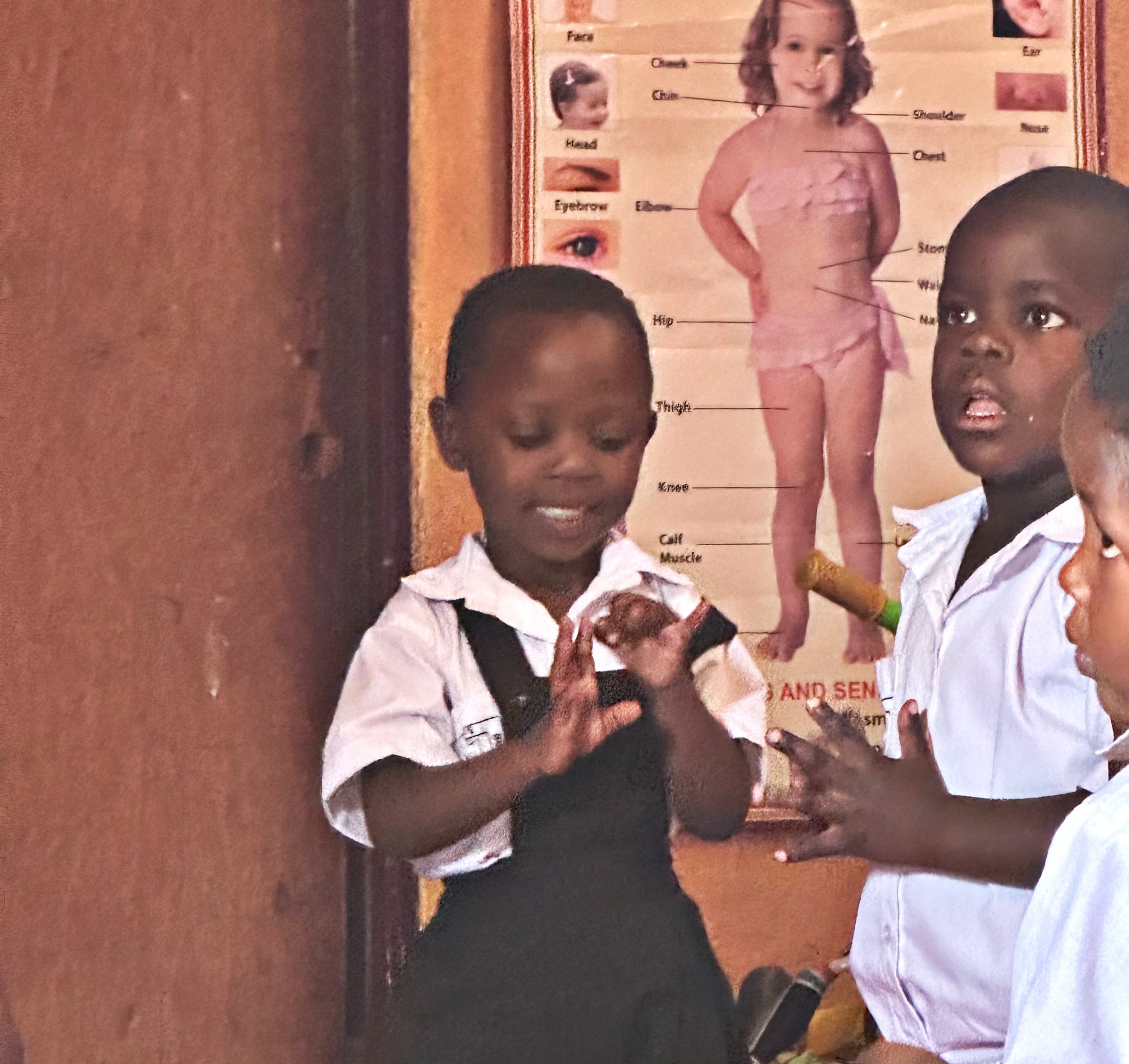
This sweet smile belongs to Emanuel, who clung to my side while we were waiting for lunch.

3 minutes, not 15 minutes
Our local organizers expressed the regret that we could only be with them for three hours of presentations and sharing, because of the five hours of travel ahead of us after our visit.
They wanted us to hear all the stories of transformation. They wanted us to know about all the healing. They wanted us to appreciate how far they had come.
In an effort to keep everyone on track, there was a lot of reminding speakers how much time they had. At one point, the MC said “And we are now going to hear testimonies that are only 15 minutes long each.”
Before the testimony could begin, our friend Placide, who has led many of the trainings in the region, grabbed the microphone and said, “The testimonies won’t be 15 minutes, but can be 3 minutes instead. All you need to do is share what you were struggling with and how you are doing now!”
As someone who has spent more than three decades attending retreats where people share their personal stories of healing and overcoming, I appreciated the firm hand they had on the wheel, as it is easy for short stories to turn into not-so-short stories.
Making ends meet
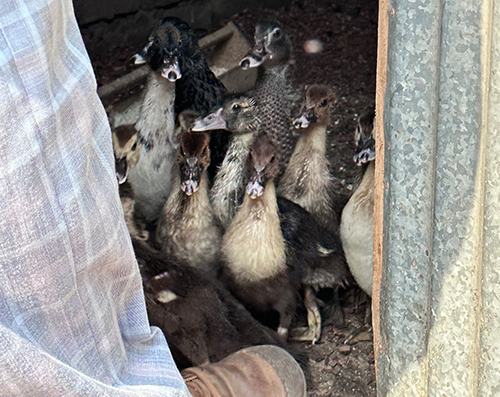
One of the things Pastor John does to support his family is raise ducks, which he then sells. He has a solar-powered incubator in his office for the eggs,which is a simple, but ingenious, set-up. A small shed, a solar panel, and a little time was all Pastor John needed to support his family and his work. When asked why ducks instead of chickens, he told us that ducks are preferable because they are more resilient to disease than chickens.
Tear Tally
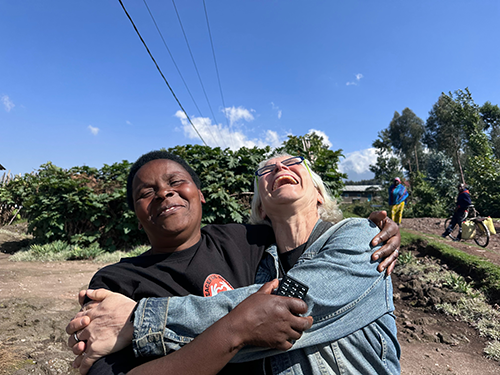
By this point in the trip, any time I think about the people, the work, the struggle, the overcoming, my travel companions, or a cold bottle of water, I am brought to tears. We have moved beyond adding tears to the tally…the #teartally = all the time!







 Scientific research is increasingly backing up what those of us in the space of transformation have known for decades: our emotional health impacts our physical health.
 In September of 2007 I created Tapping Q and A with the express purpose of creating resources that would make it easier for people to get the most out of tapping. The tag line has been “Answers to the most common (and uncommon) questions about tapping, so that you can get the most out of each round of tapping.”
 For most people, the words thankful and grateful are interchangeable. But even though they are very similar, there is a small but significant difference between their definitions.