• Skip to primary navigation
  • Skip to main content
  • Skip to primary sidebar
  • Skip to footer
  • Leave A Tip

Tapping Q & A with Gene Monterastelli - Get the most out of tapping and EFT

  • Learn Tapping
  • Podcast
  • Video
  • About Gene
  • Work w/Gene
  • Archive
    • Every Post Ever
    • Q&A
    • Podcast
    • Videos
    • Tools
    • Tap Along
    • Sessions
  • Events
  • Contact Us

Do No Harm

July 16, 2010 by Gene Monterastelli

[Note: This article is part 2 of 4 in the series “4 Principles I Never Break As A Practitioner”. In this series I am discussing four of the fundamental principles I never break in running my business. A new article will be added to the site every two or three weeks. You can read the full series and you can check out all the free practitioner resources.]
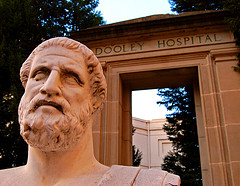

photo by Taber Andrew Bain

The Hippocratic Oath (or some oath similar to it) is taken by most medical doctors in the western world. It is believed that it is based upon an oath written by the father of western medicine Hippocrates in the 5th century BCE.

I am not a doctor and I never give any medical advice, but I think there is a lot that we as practitioners can learn from the Hippocratic Oath. Here it is in the modern version (Written in 1964 by Louis Lasagna, Academic Dean of the School of Medicine at Tufts University):

“I swear to fulfill, to the best of my ability and judgment, this covenant:

I will respect the hard-won scientific gains of those physicians in whose steps I walk, and gladly share such knowledge as is mine with those who are to follow.

I will apply, for the benefit of the sick, all measures [that] are required, avoiding those twin traps of overtreatment and therapeutic nihilism.

I will remember that there is art to medicine as well as science, and that warmth, sympathy, and understanding may outweigh the surgeon's knife or the chemist's drug.

I will not be ashamed to say “I know not,” nor will I fail to call in my colleagues when the skills of another are needed for a patient's recovery.

I will respect the privacy of my patients, for their problems are not disclosed to me that the world may know. Most especially must I tread with care in matters of life and death. If it is given to me to save a life, all thanks. But it may also be within my power to take a life; this awesome responsibility must be faced with great humbleness and awareness of my own frailty. Above all, I must not play at God.

I will remember that I do not treat a fever chart, a cancerous growth, but a sick human being, whose illness may affect the person's family and economic stability. My responsibility includes these related problems, if I am to care adequately for the sick.

I will prevent disease whenever I can, for prevention is preferable to cure.

I will remember that I remain a member of society, with special obligations to all my fellow human beings, those sound of mind and body as well as the infirm.

If I do not violate this oath, may I enjoy life and art, respected while I live and remembered with affection thereafter. May I always act so as to preserve the finest traditions of my calling and may I long experience the joy of healing those who seek my help.”

Share Knowledge
One of the things I love about the tapping community is the general willingness to share. Gary Craig deserves a great deal of credit for fostering this spirit in the ways he shared Emotional Freedom Techniques (EFT) from the very beginning. This tradition in continued through articles, blogs, videos, and forums. I know my knowable base and skill set have grown because the great generosity of others.

I think we should all strive for a generous spirit when it comes to sharing our knowledge and experience. The first three articles in this series talk about the many ways we can share our knowledge and participate in the community.

Art and Science
There is a great deal of talk in the tapping community about the “art of delivery”. This is such an important concept. The art of delivery is all about how we interact with our clients in terms of building relationship, guiding the healing process, and teaching new concepts and skills. Client work is not some math equation in which you enter in a few pieces of data and know what the next step is.

No two clients are the same and no two issues are the same. Some clients aren't very good at talking about what they are experiencing. They just know something isn't right. Often time our job as practitioners is simply to provide our clients a safe place to share their struggles and help them to find vocabulary to describe what they are experiencing.

In addition to spending time learning about new techniques and how to approach different types of issues we also need to spend time developing our skills to work with and understand people. I many times my clients know the next step on their healing path and simply need the space and safety to discover what that next step is.

Being Able To Say “I don't know.”
People come to us because we are the experts. We have skills, experience, and perspectives that our clients don't have. Because of this we are able to help our clients down the healing path.

I love the fact that my clients are willing to trust me with the issues they are facing in their lives. Often times this can be a very humbling experience. Because of this trust I want to do everything I can to help my clients.

It can be a very scary moment when we run in to an issue that we don't know how to help. We want to be helpful, we don't want to let our clients down, and we don't want to look like we aren't capable (hurting our chances to help them again in the future).

Even with these desires it is very important that we are able to say, “I don't know.” This does not mean that we have failed our clients. Instead we have served them by not creating a false sense of expectations of what is going to be accomplished and we are keeping them safe be doing work we are not comfortable or qualified to do.

Here are a list of phrases that every practitioner should add to their repertoire:

  • I don't know
  • I don't know, but you should check with…
  • I don't know, but I will do some research on that topic.

Some of these moments where I have admitted that I didn't know what the best approach should be have been some of the best learning experiences for myself. I have been forced to research new ideas and to reach out to other practitioners I trust for their wisdom and expertise.

Working With People Not Issues
One of the reasons I believe that I am good as a practitioner is because of the experience I can draw on. There are a number of issues that I have worked with for years. Because of this I can often find my way to the root cause of issues faster than I could have even just one year ago. Being able to see patterns can be a very helpful tool but we can't get so wrapped up in what we believe is going on that we miss what is truly going on.

When we work with clients we are working with a person with an issue they would like to see transformed, not working with an issue that needs to be fixed. Just because a client is describing an issue you have worked with hundreds of times before doesn't mean it is the same issue or experience as your other clients. It is important we keep our past experiences in mind, but we can't loose sight of whom we are working with.

Do No Harm
The modern version of the oath has replaced the phrase “do no harm” with “avoiding those twin traps of overtreatment and therapeutic nihilism”. Personal, I like “do no harm”.

It seems silly that we need to be reminded of something like this, but it is very easy to get very wrapped up in the work we are doing and the issues that are at hand that we forget about consequences of our work beyond this moment.

It is important that we keep our clients full life in mind when working with them, not just our time with them. We need to make sure that we are leaving them in a healthy place at the end of a session to issue they are going to be safe and healthy for the rest of day.

It does us no good to searching for painful past memories if we don't have the time to work with them. We also need to be sure that we are not leaving our client so exhausted at the end of a session that they are not going to be able to do what they need to do the rest of the day.

When I am working with particularly emotional issues I am continually checking in with my clients to insure they not only have enough energy to continue our work, but also that they are in a place to do what they need to do for the rest of the day.

Conclusion
I think Hippocrates was right in his desire to insure all of those involved in healing we reminding themselves of that they are truly called to do and why they are called to do. We would also do ourselves (and our clients) a great service if we reminded ourselves of the same thing from time to time.

If you have thought our idea that should be part of a practitioners understanding of mission please add it below in the comments.

In part three if the “4 Principles Series” we will look at the most important thing to keep in mind when working with a clients: Becoming the trusted expert.

Note: Gene enjoys helping new practitioners build their practice and current practitioners grown there practice. Let Gene know if you would like to chat about how he could help your practice today. (And yes, the consultation is free)]

Filed Under: Tools Tagged With: Health, Practitioner, Practitioner Principles Series

Reinforcing Progress By Recognizing Progress

July 13, 2010 by Gene Monterastelli


photo by David Goehring

Sometimes we make progress with our tapping that is so sublet that we don't even notice it. This is much like going on a long walk. Because the pace is so slow you don't realize how far you have gone.

Other times we make such a radical change that it is impossible to believe we had the problem before. This is something that always makes me smile. I will be working with a client on an issue that is so gripping it is the only thing they can think of. After doing some work I will ask them to tune back into the issue and they will say something like, “Oh, we don't have to worry about that, because that isn't really an issue.”

We don't have to recognize the progress we are making. The simple fact that we are progressing and growing is reward enough for doing our tapping work, but there are some befits to recognizing our progress.

1) Encouragement
By seeing our progress we are going to keep working for more. It is very easy to be caught in our current emotional state. When it feels bad it is hard for us to recognize how much better thing are now than they once were. We when can take the long view and see our progress it encourages us to keep doing work.

With many of my regular clients every few weeks we have a conversation about the progress they are making because it is so easy to miss.

2) See what works
When we recognize progress in one area of our life we are willing to use the tool set in another. When we can see how tapping directly helped with our fear of speaking we are willing to use it on our procrastination.

3) Insight to be shared
When we can see the transformation that we are going through and why it is happening then we are able to share that experience with others. As we grow and change we can help other to do the same.

How To Reinforce
One of the skills I have taken from my hypnosis training is the recognition of the power of repeating an insight or change. By revisiting a thought again and again we can create a pattern that becomes our default position. We see that with our negative self-talk. Why not use it in a positive way?

A great way to do this is to tap on the insight and growth of the most recent session. All you need to do is complete and tap on the following phrases. This will help you to gain all the benefits of reinforcing your progress, plus give you great positive phrases to tune into.

  • I know I have changed because I now feel….
  • I know I have changed because I now believe…
  • I know I have changed because I now know…

Filed Under: Tools Tagged With: after, follow up, Phrases, Progress

Why It Is Good To Be Selfish

June 28, 2010 by Gene Monterastelli

[In this series we examine the importance of the words we use and how changing our vocabulary can change our mind giving us opportunity for transformation. More articles can be found in this series @ Tools: Words]


photo by wonderferret

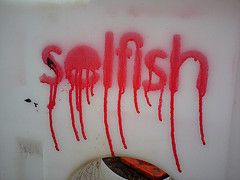
I think being selfish gets are really bad rap. Most people think that being selfish is bad. We are taught we must not be selfish, but instead we must be giving. I personally don't believe these things are opposite.

I believe that every act I make is a selfish act because it is a self-defining act. Let me give you a few ridicules examples to help prove my point.

Right now as I type the article I am taking a deep breath in which means I am being selfish. There is no other reason to breath than to stay alive. That is very selfish.

When I choose to love my family I am being selfish because I want to be a loving person. This is different than wanting to be seen as a loving person. I believe (and hope this is true) in my heart of hearts I can be and am a loving person. When I choose to love someone (and it is a choice) I am defining myself as a loving person.

When I choose to run my practice and help other people I am being selfish because I am choosing how I us my time. Yes I am helping people, and that is a great thing, but I am not healing them. That is their choice. I am just a guide in the process. They are being selfish when they choose to heal. I am being selfish when I choose to articulate who I am as person who guilds people on this path.

Yes, I know these examples are extremes, but I think they bring out the point because we think of being selfish in such extreme terms.

Not only is it okey to be selfish, it is impossible not to be selfish because every action we make with our conscious choice is a self-defining act.

When I work out to get healthier I am being selfish because I could be doing other things with my time. When I study a new skill I am being selfish to make myself a different type of person later. I am being selfish when I take a nap so I can be more present to my clients later this afternoon.

It is okay to be selfish.

The reason you are still feeling uncomfortable every time you read that is because it is very easy to believe that selfish equals greedy, mean, heartless, and willing to hurt other.

Other than this article I willing to bet less than five times in your life have you been told it is okey to be selfish.

We need to be selfish. If we don't take care of ourselves we are never going to be able to take care of others.

We need to be selfish. If we don't take care of ourselves then we aren't taking care of ourselves.

We need to be selfish. If we don't take care of ourselves we are never going to grow and heal in to who we truly are.

Yes, I know you are still resisting this. That is okey. Tapping for this might sound like:

I don't want to be selfish…because I need to care for other people…there are people who have it so much worse than I do…that I can't ask for anything more or better…and the things I have…I have squandered…it would be really selfish to ask for more…but I choose to know that selfish means I am making self defining act…every choice I make is a selfish act…I can love someone else and be selfish…because I want to be love…I can care for someone else because they are in need and be selfish…because I want to be giving…this doesn't take anything away from those loving acts…this doesn't mean they are less valuable…it just mean that when I am share I am also defining myself…it is okey to want better for myself…because I can then share with other…it is okey to want more for myself because then I can share more of the self with others…I am worthy of taking care of myself…that is not greedy…that is being healthy….I need to be healthy…I must be healthy…it is okey that I don't think being selfish is a bad thing…I don't want to be mean…I don't want to be greedy…but those are not the same a selfish…to be selfish is to choose to be the type of self I want to be.

Filed Under: Tools Tagged With: Love, Self Esteem, Selfish, Words

The Growing Up Method

June 25, 2010 by Gene Monterastelli


photo by flydime

I am always on the look for new ways and easy ways to get tap on issues. Here is a great process by Natalie Hill. (Natalie writes regularly on new ways to approach tapping at EFT Tapping Techniques.

I really like Natalie's process because it is very straight forward and allows you to be very easy with yourself when coming up with phrases. I receive questions all the time about what is the right phrases to be used for a specific issue. The process is as easy as explaining to a close friend what is going on, what you would like to be able handle, and what you would like the outcome to be. Is a prefect example of how flexible the tapping protocols can be.

Step One: Dumping

When you first tune in to a strong emotional issue…

…you may hear things a two, five, 10 or 15-year old might think and feel.

Dumping is the ideal place to start, when you’re in that immature place.

In other words, for the first phase and rounds of this tapping technique, allow yourself be petty and childish.

Dump, vent, rant, whine, complain, moan, gripe.

Let all the negative out.

Don’t worry about accentuating or increasing the positive –
– you are doing a psychological cleanse.

Up and out with those petty thoughts and emotions.

If you ignore the crummy thoughts and feelings, try to deny or repress them, they will prevent you from fully resolving the issue. You’ll have an inner conflict, even if you’re not consciously aware of it.

After a few rounds of Dumping, you’ll feel a lot better.

The way I would do this step is just to start talking. Don't worry about crafting the perfect tapping phrase. Just start letting it out. As you do this just move from tapping point to tapping point. Just tap and let it out.

This is a great first step. I often refer to this step clearing the decks. Yes, it is very important to be very specific on the issue that we are tapping on, but sometimes there is so much spinning around in our head that it is impossible to focus. By dumping in this fashion we are going to clear out all the extraneous emotions and thoughts. This is the step that is going to allow us to find our way to what is really at the heart of the issue.

Often time when I this type of step with my clients a great deal of clarity is found. They go from “feeling really frustrated” to being able name what is really going on, giving us a great spring board to go after the deeper roots.

This step is not meant to take care of the issue completely. As Natalie writes, ” When you’re feeling somewhat better, down from where you started (or from an 8, 9 or 10) to somewhere between 4 and 7, move to Dreaming.”

Step Two: Dreaming

Dreaming is the way we sneak the change we want by the conscious and unconscious gatekeepers that don’t want us to change.

In this tapping technique, we are introducing the possibility of letting go of the stuck place, without raising so many objections.

In the dreaming phase, we start our EFT affirmations with the words,

“Wouldn’t it be nice if…”
“Wouldn’t it be great if…” or
“What if…”

For example if we were tapping for overwhelm, this might be your Dreaming tapping round:

Eyebrow: What if I could slow down a little?
Side of Eye: What if I could acknowledge that I don’t have to do everything right now?
Under Eye: What if could just focus on one task at a time?
Under Nose: Wouldn’t it be nice if I could relax, knowing I can’t get it all done in a day?
Chin: Wouldn’t it be nice if I could feel more confidence in myself?
Collarbone: Wouldn’t it be nice if I could trust that it will all work out?
Under Arm: What if I could focus on just the most important thing first?
Top of Head: What if I could let go of everything else?

You can do one, or several rounds in this Dreaming phase.

I love using questions when tapping. The subconscious mind does a wonderful job of filling in the blanks. Often times when we tap in this fashion we are going to come to insights and realizations. Clients often report a being amazed that the things there own system comes up with when tapping on questions.

One recommendation I might add to this is not to rush through a list of questions like these. Instead, linger on each question for a few tapping points allowing the system to sit with each questions, giving it a chance to provide useful information.

Natalie recommends that you do this type of tapping until you have reached the SUDs level of 3 or lower.

Step Three: Deciding

This will be your final round or two. Its intent is to bring you to a fully positive and empowered state, with your desired result.

You begin your EFT affirmations in this Deciding part of the process with the phrases,

“I have decided…” and
“I choose…”

To continue our example of tapping on feeling overwhelmed, this final round would go like this:

Eyebrow: I have decided I actually can handle everything I want and need to do.
Side of Eye: I have decided to focus on just one task at a time.
Under Eye: I have decided to feel confident about my abilities.
Under Nose: I choose to relax and do one thing at a time.
Chin: I choose to trust my judgment.
Collarbone: I choose to know that it will all work out fine.
Under Arm: I choose to remember I’m good at prioritizing.
Top of Head: I have decided to feel calm and confident.

It is amazing how much of a difference making a choice can make. Even if it is about something in the future, the simple act of committing to something moves the mind from the place of living in all of the possible outcomes.

I would also add “I give myself permission…” to this list of tapping phrases. I have found that giving permission is a powerful act that allows us to make transformation.

Natalie thoughtfully adds:

If, in any stage of this process, a new disturbing emotion or memory arises, take a little side-trip by returning to Dumping to clear it. Use the whole Growing Up process on that new emotion or memory. Then return to the place you left off in the process.

Filed Under: Tools Tagged With: Guest Author, How To, Natalie Hill, Negative Phrases, Phrases

Giving It Away For Free – How I Give Things Away For Free (1c of 4)

June 22, 2010 by Gene Monterastelli

[Note: This article is part 1c of 4 in the series “4 Principles I Never Break As A Practitioner”. In this series I am discussing four of the fundamental principles I never break in running my business. A new article will be added to the site every two or three weeks. You can read the full series and you can check out all the free practitioner resources.]


photo by lazysupper

In part 1a we looked at the reasons for giving things away for free. In part 1b we looked at the costs and benefits of different types of free information and services. In this part we are going to look at the ways I use free in my practice.

Let me be very clear; this is not the best way or only way to use free stuff, it jus the way I am doing it.

1) The Web Site And Podcast
This is by far my biggest effort when it comes to free. I will be honest; my publication schedule is crazy. There is a new free resource on this site every three or four days. I spend as much as 20 hours a week on content. I would not recommend this for you (or anyone for that matter), especially when you are first starting out.

There are some great websites I read and podcasts I listen to that only produce content once a month. If you are starting to produce free content once a month is a great publication schedule to start with. People's lives are busy and they don't have time to consume all of the content that is out there.

I have other goals for the content that I create beyond just what we are talking about here and that is part of the reason I have such an ambitious publication schedule. [Read more about why I have this site.]

2) Six Audios + Newsletter
My newsletter is very important because it gives me the opportunity to reach out to readers. It is one thing to have a website that people are going to visit, but everyone has busy lives. They are going to forget you are out there. But when you have permission to send them e-mails then you have a chance to remind them that you are out there. Every Thursday I send a note to my readers that lists all the new information on the site, if there are any new products, and just a quick note to say hi.

I am sure we all have newsletter overload. There is so much out there. The free six audios I offer are an enticement to get visitors to sign up. Sure they can unsubscribe anytime they want (like right after they receive the sixth audio), but it cost me nothing to offer it to them once the audios were produced and hopefully they will stick around.

A common mistake I see made with newsletters is they don't contain any content. There are a number of newsletters I get that only have announcements of new classes and new products. Yes, I want to hear what these people are up to, but if it is nothing more than a string of announcements I am not going to rush to open it. About once every three or four weeks I send a direct sales letter, but every other newsletter I send out over the month contains links to at least two free resources (sometimes more).

I want people to be excited to get my newsletter because they know they are going to get content that will improve their Emotional Freedom Techniques(EFT)/tapping skill set. Every time I deliver something of value I am building my credibility and reputation with my readers that will lead to sales and session.

It is important to note that less than 5% of my readers are ever going to buy anything. That is fine because it cost me very little time to provide this free information to my readers.

3) Being Interviewed
I can't think of a time that I have turned down being interviewed. This true for articles, podcast, teleclasses, and radio programs. Being interviewed costs us very little time and gives us the benefit of having someone else speak to our value by introducing us to their readers and listeners. I see a spike in newsletter sign-ups and have tracked sales directly to these interviews.

When people are interviewing you they know you are giving your time and expertise. In exchange for this they are willing to let you promote yourself. When I do an interview I always set up something for the listeners. I will create a special web page just for the interview and give the listeners a free audio.

4) Free One-On-One Sessions
As we talked about before this is a high cost, but high impact give away. The main way I give free sessions away in through the podcast. In each podcast I share a word or phrase with the listeners. If they e-mail the word or phrase in they placed in drawing. One any given week I will do between one and three free sessions.

I have a very specific follow plan with these sessions. Three or four days after the session I send a note thanking them for giving me a chance to work with them, I ask them for a testimonial, and I offer them a chance to purchase a session or a bundle of sessions at discount.

5) Enticements To Buy
It has been proven that giving bonus with any purchase works. Every sales letter I have sent to my list (with only one exception) have contained bonuses. Yes the phrase, “But, that's not all” seems very cheesy, but the sentiment works. My basic rule of thumb is to offer 125% of the price of what I selling worth of bonus.

The nice thing about digital products (like tap along audios) is they cost me nothing more to add. I have already invested the time in their creation and it costs me nothing to give the buyer access to them.

Conclusion
These are just five ways you can use free to build your readership and/or client base. There are a million other ways to use free. What is most important is that you are doing it with a plan and to track your results to see if you are getting value for your free offers.

In part two if the “4 Principles Series” we will look at the most important thing to keep in mind when working with a clients: Do no harm!

Note: Gene enjoys helping new practitioners build their practice and current practitioners grown there practice. Let Gene know if you would like to chat about how he could help your practice today. (And yes, the consultation is free)]

Filed Under: Tools Tagged With: Practitioner, Practitioner Principles Series

  • « Go to Previous Page
  • Page 1
  • Interim pages omitted …
  • Page 12
  • Page 13
  • Page 14
  • Page 15
  • Page 16
  • Interim pages omitted …
  • Page 19
  • Go to Next Page »

10 Steps To Stop Self-Sabotage

Get your FREE 10 step guide to using EFT to stop self-sabotage in your life.

Search Tapping Q & A

Meet Gene Monterastelli

Gene MonterastelliGene Monterastelli is a Brooklyn based tapping practitioner. In addition to working with individual clients and groups, he regularly writes and records about how to use tapping to move from self-sabotage to productive action.
Gene’s Full Bio & Services


Subscribe via: Apple Podcasts | Google Podcast | Android Phone | Spotify | Pandora | Amazon Music | Audible | iHeart Radio | Castbox | Alexa | Stitcher | TuneIn | Deezer | aCast | Himalaya | Overcast | Luminary | RSS
Visit the complete Podcast Archive

Apple App | Google/Android App


This book is not just about EFT and tapping for anger. The book contains some of the most comprehensive step-by-step tapping tools that can be used for all emotions and can be added to your tapping tool set right away.

For every book purchased, four inmates will also receive a copy of the book.

For every book purchased 4 inmates will also receive a copy of the book.

Paperback | Kindle Version

Copyright © 2026 · Refund Policy · Terms of Use· Privacy Policy