• Skip to primary navigation
  • Skip to main content
  • Skip to primary sidebar
  • Skip to footer
  • Leave A Tip

Tapping Q & A with Gene Monterastelli - Get the most out of tapping and EFT

  • Learn Tapping
  • Podcast
  • Video
  • About Gene
  • Work w/Gene
  • Archive
    • Every Post Ever
    • Q&A
    • Podcast
    • Videos
    • Tools
    • Tap Along
    • Sessions
  • Events
  • Contact Us

What If I don’t (or can’t say while Tapping/EFT) “Completely Love And Accept Myself”?

June 30, 2021 by Gene Monterastelli

Note: This article was originally published October 22nd 2012 and has been updated.

From the very beginning, the first step of Gary Craig’s Emotional Freedom Techniques (EFT) was to tap on the side of the hand and use what he called the set-up phrase: “Even though I have this issue I deeply and completely love and accept myself.”

I can appreciate the sentiment of wanting this for ourselves, but many clients over the years have queried why they need to use this phrase.

Here are five thoughts to consider when choosing tapping phrases:

1) The Words We Use While Tapping Aren’t Magic

This is the piece of advice I give most often to tapping beginners. When most of us learn tapping we are taught to tap on a point while saying a phrase. This can lead us to believe that to get relief what we need to do is say a phrase and tap.

In reality the way we find relief while tapping is by focusing on an issue and tapping on the points. Saying words out loud about the problem is one effective way of focusing your effort BUT it is not the only way.

Your focus is of most importance, not the words you use.

Sometimes a specific word, phrase, or reframe will help us to focus intensely, while at other times no words are needed at all. The great thing about tapping is that it is really quick and there are few consequences for trying something new.

My advice is to try lots of different phrases and find the ones that work best for you. If something is not ringing true, try something else, it will only cost you a few seconds. So if the phrase “I love and accept myself” isn’t useful, then look for something else that is.

[For more information on the types of information that we get from each round of tapping and what to try next check out Feedback: What We Can Learn From Each Round Of Tapping]

2) Even If We Don’t Believe The Words We Say While Tapping They Can Still Be Helpful

This builds on the principle of our focus being more important than the words we say. Often saying words we don’t believe helps us to focus on the issue we want to address.

Let’s take weight release as an example.

Imagine that you want to release 35 lbs. but there is a part of you that doesn’t believe it is possible. You could tap on the phrase “there is a part of me that doesn’t believe I can release this weight” as an easy way to tune in to that part of yourself that feels hopeless about shedding the excess pounds.

You could also say the exact opposite and achieve the same result. You could tap on a phrase like “I know that I am going to release 35 lbs!” and the little voice inside my head will respond “No, you are not! There is no way you will release this weight. It’s hopeless!”

Here the focus is not on the words, but on the feelings of hopelessness around the situation. In both cases you are tapping on the same issue, even though the phrases have opposite meanings.

The same can be true for the phrase “I love and accept myself.” When you say this phrase out loud and focus on whatever emotions arise, you will be tapping on the issue that needs to be addressed.

This is especially true if you believe the phrase because the critical voice inside your head will pipe up and tell you so.

3) There Might Be A Reason That You Don’t Like The “Love And Accept Myself” Phrase While Tapping

I find it interesting when my clients have an immediate visceral reaction to something because it tells me that we have struck a nerve.

For example, you could call me overly obsessive about sports. I may disagree with you on this, but you won’t get an emotional response from me because it’s not something I worry about in my own life.

On the other hand, if you were to call me self-absorbed, that would elicit an emotional response from me. I would feel attacked, hurt, and offended. Not because this is not true, but because I do personally I struggle with this concern. I would feel attacked because there is a wound around this area of my life and you just prodded that wound.

I believe one of the main reasons people don’t like saying “I love and accept myself” is because it hits close to home as something a part of them can’t believe. We don’t like saying these words because they remind us of our own failings.

Saying something we don’t believe in gives us the opportunity to tune in to the part of our personality that doesn’t believe the phrase. If there is a strong “I don’t like saying I love and accept myself” reaction, then this is a great area to explore when you are tapping on our own or with a practitioner.

4) Other Phrases To Try While Tapping

Occasionally some issues can be so emotionally charged that it is not useful or safe for us to dive into them. One of the reasons I love tapping is because it allows us to creep up on a problem slowly without having to go directly to the most painful part of it.

If the phrase “I completely love and accept myself” is too emotionally charged to be useful to you, try these alternatives instead:

  • I give myself permission to love and accept myself
  • I might not believe that I love and accept myself, but someday I know it will be possible to love and accept myself
  • I am worthy of loving and accepting myself if I don’t right now
  • I give myself permission to love and accept myself one day
  • I give myself permission to believe that it is possible to love and accept myself
  • It is safe for me to love and accept myself
  • There is a part of me that fully loves and accepts myself even if I don’t have access to that part at this moment
  • Even though I am not perfect, I am open to the possibility of loving and accepting myself anyway
  • This work is helping me to work towards loving and accepting myself

If you are looking for more creative set-up phrases you should check out the set-up phrase generator. Each time you refresh the page it will give you 10 new set-up phrases to try.

5) The Reason I Never Start With The Set-Up Phrase

Never might be a little strong, but as a general rule I don’t start a round of tapping with the set-up phrase because the emotional reaction it prompts in many people can be distracting. If you are tapping on an issue that has nothing to do with love and acceptance and you have an issue with that idea, then you are complicating the moment.

For example, let’s say I’m tapping on a pain in my knee and I tap on “Even though I have this pain in my knee I love and accept myself.” Now I am dealing with the pain in my knee AND I have surfaced issues with the self-acceptance issue. Instead, I find it more useful and natural to tap on self-acceptance when it arises in connection with another issue.

This last point is rather controversial and I know a number of respected practitioners who would strongly disagree with me. As always, do what works best for you.

Conclusion

Do you have to say, “I love and accept myself” for tapping to work? Of course not.

BUT if you are having a hard time saying it or you feel uncomfortable when you think about it, then it is more than likely that you have hit a nerve around an issue that needs some extra attention. As Mastin Kipp says, “Without self-acceptance self-help won’t work” so you might consider making time to tap specifically on this issue.

Filed Under: Q&A Tagged With: Accept, Don't Know What Words To Say, Emotions, Love, Phrases, Physical Response, Resistance

Pod #512: How To Speed Up The Healing Process

June 24, 2021 by Gene Monterastelli

We have all heard the old saying that “hindsight is 20/20 vision” because it is so much easier to look back and see how we could have done things differently from the vantage point of the present.
When this happens we can end up judging ourselves very harshly. The problem with this type of evaluation is we are judging our past self with new knowledge. It’s easy to think “What on earth was I thinking?! It is so clear that was the wrong choice to make!” when in reality we were doing the best we could with the knowledge and information we had at the time of the choice.

In this week’s podcast I share a fresh approach you can take when evaluating your past choices and use it to guide you towards more effective healing.

Support the podcast!

Subscribe in: Apple Podcast | iPhone | Android | Google Podcast | Spotify | Pandora | Amazon Music | iHeartRadio

Filed Under: Podcast

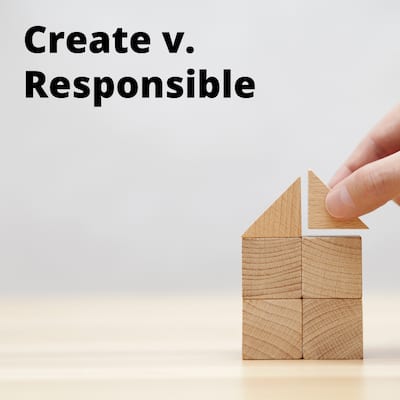
Create v. Responsible

June 16, 2021 by Gene Monterastelli

[In this series we examine the importance of the words we use and how changing our vocabulary can change our minds, giving us an opportunity for transformation. More articles can be found in this series here: Tools:Words]

Note: This article was originally published November 20, 2011 and has been updated.

I was recently working with a client who has Lyme disease. At one point in the session he said, “I created this situation.”

This statement really struck me. I asked myself, “Did he really create the situation?” and more importantly, “Is it helpful to worry about how a situation was created?”

Sometimes it is obvious when we create a situation, such as choosing to accept a job offer. At other times our lack of action creates a situation, like having your power turned off for failing to pay an electric bill.

But just because something is happening in my life does not mean that I have created it. I think this is one of the areas in which Law of Attraction teaching only goes so far. To assume I am creating everything in my life would mean that my intention is more powerful than the free will of the people around me.

For example, if I am sitting in my living room and a baseball smashes through my front window, it wasn’t because I created that situation.

Even if you are willing to argue that I did somehow create the situation of the baseball shattering the window, in the short term it doesn’t matter how or why it happened. What matters is what comes next as the window will not fix itself. It is up to me to take responsibility for the broken window, clear up the glass so that nobody gets hurt, and have the window fixed to keep the elements out.

One of the pitfalls of looking at the world through the eyes of “how we created” a situation is it can impede the healing process. It’s often helpful to reflect on why something happened so it won’t happen again. At the same time, if we are only trying to figure out how it was created or how we created it, we will get stuck.

In our example, if I am only worried about how and why the baseball came through my window, my living room will remain covered with broken glass.

For me, it is much better first to respond to what I am responsible for in a situation without allowing myself to get entangled in the emotional trap of wondering why or how I got there.

In the example of my client with Lyme disease, worrying about the specifics of how he got it will not be helpful. More than likely he will never again be in a situation where he is exposed to the disease. Instead he can move forward by recognizing what he is responsible for. He is responsible for how he feels physically right now, for taking his medication, following his doctor’s advice, and understanding the lifestyle choices and environments that cause a flare up of the symptoms.

By focusing on what we are responsible for we are able to leave behind the emotions of what was and move to the energy of working with what is.

That is why I think it is so important that we understand the difference between creating and being responsible for something in our lives. First, I respond to what I am responsible for. This is what is in front of me and what I am going to do next. Once that is done there will be the opportunity to ask questions about how something was created. It might be the consequence of a choice I made, the choices of others, or a situation that will never happen again.

Doing our investigation in this order allows us to take care of the healing in the most efficient order and prevents us from taking more responsibility than is warranted.

Click here to read what others have to say. I would really love to hear what you think!

Filed Under: Tools Tagged With: Awareness, Create, Responsible, Words

Pod #511: How Our Ancestral Past Makes Us Feel Unsafe Today

June 9, 2021 by Gene Monterastelli

As my friend Jondi Whitis likes to say, “At our core we are herd animals.” This statement has some profound impact when it comes to how we see ourselves, the actions we take, and how self-sabotaging behaviors show up in our lives.

When we are making choices and taking action, we aren’t just considering facts and practicalities, we are also influenced by our genetic heritage.

This week I explore how some of our hardwired survival instincts impact our ability to make choices that line up with our authentic selves AND how we can use tapping to get past this and live the lives we want.

Link mentioned in the episode:

  • Pod #292: How We Inherit Trauma Genetically w/ Mark Wolynn
  • Pod #473: Attachment Trauma v Generational Trauma w/ Mark Wolynn

Support the podcast!

Subscribe in: Apple Podcast | iPhone | Android | Google Podcast | Spotify | Pandora | Amazon Music | iHeartRadio

Click here to Read what others have to say or add your own thoughts and comments. I would really love to hear what you think!

Filed Under: Podcast Tagged With: Action, Authentic Self, Fear

Knowing Good Enough Is Good Enough OR The Myth Of Excellence

June 2, 2021 by Gene Monterastelli

Note: This article was originally shared on June 4th, 2013. This is an updated and edited version of that article.

While working with small business owners I bump into the issue of perfectionism a great deal. We all worry about what other people think of us but this becomes a particularly acute problem for small business owners whose success is directly related to their personal credibility and how they are perceived by others.

As an example, a client I’ll call “Jane” was building a WordPress website for her business and she was unsure how she wanted it to look.

WordPress allows users to change the look and feel of an entire website at the click of a button by switching from one theme to another. There are thousands of free WordPress themes and Jane was overwhelmed by the choice. She wanted the website to be just perfect.

What Is “Just Perfect”?

I find the concept of “just perfect” interesting. What exactly does that mean?

For many the idea of “just perfect” means that what we choose has to be top of the line or in the top one percent. It needs to be better than everyone else.

But is that really worth striving for?

I don’t think it is.

Often “just perfect” means that it is doing its job.

Where building a new website is concerned, it needs to provide information to prospective clients, so “just perfect” means that the site is visually clear, and easy to navigate and understand.

A $40 logo can be perfectly acceptable, so there’s no need to spend $4000 on one.

Plain, easy-to-read text does the job just fine, so animations and videos are optional extras.

Ideally, a website is a delivery system for great content. Jane’s readers will visit the site because of what they want to learn, not because of its fancy design.

That’s not to downplay beautiful design and the thought that goes into the look and feel of a good website BUT it’s important to understand the concept of “good enough”. Especially when we are just starting out, good enough is an excellent goal.

When Not Perfect = Failing

It is amazing that many of us feel like we have failed when something is just good enough.

We have been taught constantly to strive for better. We have been encouraged to dream. We long for a richer life. Because of all this expectation, we believe that if something isn’t perfect, then it is bad.

I believe that in the majority of cases, good enough IS good enough!

Years ago, my father gave me a great example of understanding this concept. In order to sell a new product at work he needed to get at least 70% in a certification exam. In the weeks leading up to the exam he studied diligently. When he got home from the test I asked him how he did and he told me, “I got 74%…I studied too hard.”

He knew exactly what good enough was. He wasn’t looking for an ego boost in wanting the best score in the region or needing to prove anything to himself (or anyone else). He just needed to pass the test so that he could move on to the next thing.

Being Perfect At Being Good Enough

I was talking about the idea of “good enough is good enough” with another client. She asked, “How do I master the idea of ‘knowing good enough is good enough’?”

I paused for a moment.

And then she laughed at herself as she realized how ridiculous that statement was…she had just asked “How do I be perfect at ‘not needing to be perfect all the time’?”

The key to transforming our sense of perfectionism is first to be easy with ourselves, and to be easy with the process of not being so hard on ourselves. By doing this we can focus on what is needed to be successful and release the need for everything to be perfect in order to be successful.

Here’s a tapping script you can use when you are struggling with the need to be perfect when good enough is just that:

It is important that I continue to strive in my life…There are parts of my life that I would like to be richer…There are relationships I would like to be fuller…I have gifts and talents I want to share with the world…But this doesn’t mean that everything has to be the very best…It is important that I keep all of my goals in perspective…Just because something can be done better doesn’t mean that it has to be done better…My laundry needs to be folded well enough…My bed needs to be made well enough…My car needs to be parallel parked well enough…It is possible for me to do all these things better…But nothing would be achieved by the extra effort…There are so many things I would like to grow into…That I need only spend as much time as is necessary on each task…I don’t want to do less than is necessary…But it is important that I maintain balance and perspective…What is essential is the final goal…Not each of the pieces…I give myself permission to be comfortable with good enough…And to know that good enough isn’t settling…But instead by achieving good enough I am giving myself the time and resources for all the parts making up what I am trying to achieve…I am going to keep the big picture in mind…To understand what is good enough in each situation…Good enough is not failing…It is good enough…And that is just perfect.

Click here to Read what others have to say or add your own thoughts and comments. I would really love to hear what you think!

Filed Under: Sessions Tagged With: Business, Failure, Perfect, Success

  • « Go to Previous Page
  • Page 1
  • Interim pages omitted …
  • Page 101
  • Page 102
  • Page 103
  • Page 104
  • Page 105
  • Interim pages omitted …
  • Page 316
  • Go to Next Page »

10 Steps To Stop Self-Sabotage

Get your FREE 10 step guide to using EFT to stop self-sabotage in your life.

Search Tapping Q & A

Meet Gene Monterastelli

Gene MonterastelliGene Monterastelli is a Brooklyn based tapping practitioner. In addition to working with individual clients and groups, he regularly writes and records about how to use tapping to move from self-sabotage to productive action.
Gene’s Full Bio & Services


Subscribe via: Apple Podcasts | Google Podcast | Android Phone | Spotify | Pandora | Amazon Music | Audible | iHeart Radio | Castbox | Alexa | Stitcher | TuneIn | Deezer | aCast | Himalaya | Overcast | Luminary | RSS
Visit the complete Podcast Archive


This book is not just about EFT and tapping for anger. The book contains some of the most comprehensive step-by-step tapping tools that can be used for all emotions and can be added to your tapping tool set right away.

For every book purchased, four inmates will also receive a copy of the book.

For every book purchased 4 inmates will also receive a copy of the book.

Paperback | Kindle Version

Copyright © 2026 · Refund Policy · Terms of Use· Privacy Policy