• Skip to primary navigation
  • Skip to main content
  • Skip to primary sidebar
  • Skip to footer
  • Leave A Tip

Tapping Q & A with Gene Monterastelli - Get the most out of tapping and EFT

  • Learn Tapping
  • Podcast
  • Video
  • About Gene
  • Work w/Gene
  • Archive
    • Every Post Ever
    • Q&A
    • Podcast
    • Videos
    • Tools
    • Tap Along
    • Sessions
  • Events
  • Contact Us

It’s Not Your Fault – I Learned Everything I Needed To Know About Manifesting From Good Will Hunting

October 26, 2013 by Gene Monterastelli

The most memorable moment from the 1997 movie “Good Will Hunting” is when Will (played by Matt Damon) is talking with Sean (played by Robin Williams) about his history of abuse. Will is sharing how his father beat him.

Six times Sean says to Will, “It's not your fault”.

Again and again.

“It's not your fault.”

Will slowly breaks down.

“It's not your fault.”

By the end he finally believes him.

It's Not Your Fault!

Over the years it is amazing the range of things that my clients have taken credit for in their lives. Everything from partners cheating to animals being hit by a car. I even had one client take credit for a flash flood that destroyed everything in her basement.

Please, don't get me wrong.

I am not saying that we are simply at the whims of the universe and that we are helpless victims of the fates, but I do think people often take too much responsibility for what is happening to them.

Personally, I think the problem comes from the way most people use the word ‘manifest’. Because it is possible to create new opportunities in our lives people take it to an extreme and think that everything in their life is a direct result of their thoughts and the choices that they have made.

Somewhere there is a line between what we have created in our lives and what is outside of our control. And to be honest, I am not smart enough to know where that line is.

I do know this: most of my clients err on the side of taking too much responsibility.

AND what is worse is that they beat themselves up for “manifesting” these bad things into their lives. I think this causes two problems. First, I believe it is harmful to blame ourselves for something that isn't our fault. Second, when we do this we often remain in an emotional state of blame and self-recrimination and so we don't take any new positive action.

There are so many times where I just want to say over and over again to my clients “It's not your fault.”

It's Not My Fault, So Now What?

Regardless what has happened leading up to this point and whose “fault” it is, what is much more important is how we choose to react.

The one thing we DO have control over is our reaction. The one thing that we can take responsibility for is what happens next. In order to do this we need to release the feeling of blame and shame for what we have created in our life.

When my clients are caught up in this blame/shame response the first thing I have them do is tap to something like this:

Right now there is something in my life that I don't like…I might have manifested it in my life…Or it might be something that has shown up because of things outside of my control…Someday it will be important for me to get to the root of how this happened…But right now the most important thing is how I respond…Right now the most important thing is that I take responsibility for my response…Right now the most important thing is the choice I am going to make next…Part of me wants to blame myself for this…Part of me want to punish myself for creating this…I choose to let that desire go for now…I choose instead to make the best possible choice as I move forward…I choose to take responsibility for my response…I choose to make the best possible choice to get out of this…I choose to make the best possible choice to move forward…I choose to take responsibility for what I do next…That is where I have the most control.

It's About Your Next Action

I want to be very clear. I do think it is important to understand why things happen in our lives. It is even more important to recognize the patterns that are showing up and to take responsibility for any unhealthy choices that we are making.

BUT, in the short term what is more important (at least in my mind) is the choices that we make next in response to what is happening in our lives. What we do next is more important than how we got here.

When you are stuck in the blame/shame cycle and things aren't going right, take a few moments to tap through the script above.

If you are looking for more tools and tap-alongs to help you make better choices in response to where you are come join us in the Ruach Center. Currently there are over 100 tap-along audios and more than 25 tools to help you tap in response to wherever you find yourself.

Filed Under: Q&A

What To Do When EFT Isn’t Producing Results

October 19, 2013 by Gene Monterastelli

Good morning!

When I sit down to write these newsletters I do it in a vacuum.

Most of the time I am sitting at the big table in the back of Black Brick coffee in Brooklyn. My starting point is always the hope that I will produce something helpful.

But I really don't know what will happen.

Will you like it? Will it be useful? Or did I miss the mark?

It's always fun when something I write really hits home for you.

Based on the comments and personal emails I received I am guessing I struck a chord with last week’s article on tapping for action, tapping for relief, and being stuck in the tolerable middle. (If you missed it you can find it here: https://tappingqanda.com/?p=9270.)

After recognizing that we need to do more than tap just to feel better the next step is to have a plan that will move us toward action.

The mistake that is most often made when tapping is we deal with root cause.

YES, you read that right. It is a mistake to deal only with the root cause of the issue. Often there is one more step that needs to be taken for transformation to take place.

Read about the step that needs to happen after clearing the emotional root cause: https://tappingqanda.com/?p=9288

I would love to hear your thoughts on this missing step to the healing process.

As always, let me know what I can do to be helpful.

Gene

PS: On Monday I shared a quick note on how you can support ovarian cancer research and receive 10 tap-along audios to help you take action. You can see the details here: https://tappingqanda.com/?p=9282

* * *

The 3 Stages Of Lasting Transformation
Knowing what we want to change and clearing the root causes to an issue sometime aren't enough. Often times there is a third that needs to be made for lasting change. In this article we look at what that third step is.

* * *

EFT Inner RePatterning w/ Tania A. Prince

Cravings, Savoring Food, and 3 Steps To Approach Every Problem

Why I Hate Emotional Freedom Techniques (EFT)

Tap-Along Audio: The Things That Drive You Crazy Are Your Greatest Teachers. Finding Calmness Within The Storm.

Video: Tapping Before Eating

Filed Under: Notes

The 3 Stages Of Lasting Transformation

October 18, 2013 by Gene Monterastelli

I was talking to one of my long term clients “Jesse” this week. She said, “Intellectually I get this, but I still can't seem to make the change.”

What Jesse is experiencing is very common. The reason that most of us find our way to tapping is because understanding something intellectually often isn't enough for us to change our behavior.

In thinking about the process that most of my clients have gone through (and what I have experienced in my personal work) I have realized there are 3 basic steps to making a lasting change in our lives.

Intellectual/Cognitive Understanding

This happens all the time. This is when we know exactly what change we want to make and why we haven't been making the right choices in the past. For example we know intellectually that:

  • It doesn't need to be perfect. It only needs to be good enough.
  • It doesn't matter what my parents think about me looking for a new job.
  • If I commit to just 30 minutes of exercise three times a week I’ll see an improvement in my fitness.
  • Worrying continually about things I cannot change helps nobody.

Emotional Understanding

Just because we understand something intellectually doesn't mean that we will make new choices. Every single one of my clients who is a perfectionist knows they are a perfectionist, knows that it doesn't serve them to be a perfectionist, and wants to change this about themselves.

Most of them can feel themselves being too much of a perfectionist even as they are acting on their perfectionistic tendency. They can be saying out loud, “I don't need to do this perfectly” yet are still unable to stop themselves.

This is because on an emotional level there is a part that still believes it is dangerous to not be perfect.

Until there is an emotional understanding of the intellectual insight lasting change can’t take place.

Habitual Change

This is the type of change that is most often missed and the thing that causes tappers the most frustration about the process.

It goes something like this: We have an emotional belief that we need to have everything just perfect, so every night before we go to bed we spend 45 minutes cleaning the house. We tap for the sense of perfectionism, aiming to get to a place where we know that the house doesn't have to be perfectly clean every day…and we still spend 45 minutes cleaning before we can get to bed.

What Happened?

What has happened is part of our end of day routine is to clean for 45 minutes. It is no different than the habit of brushing our teeth before bed. It has become part of our muscle memory and so we do it even though the emotional motivation is gone.

This doesn't just apply to our action. We also create habitual emotions and self-talk. For example, I might have the habit of asking “What did I do wrong?” every time something goes wrong even if I had nothing to do with it. I can tap to recognize that it is not always my fault, but questioning my responsibility can be a habit.

Conclusion

To make long term lasting change we need to change three things: our understanding, our emotional response, and our habitual response.

If you are looking for help with doing this the Ruach Center has tools, tapping scripts, and tapping audios to help with you with all three steps. If you don't know how to do one of these steps for something you are trying to change in your life you should check it out.

Filed Under: Q&A Tagged With: Transformation

10 Free Tap-Along Audios To Help You Take Action (+ 10 More)

October 14, 2013 by Gene Monterastelli

Good morning (and Happy Thanksgiving to my Canadian friends)!

My friend Jasmin is in the process of raising money for ovarian cancer research and is willing to wear old silly dresses to do it!

As of the writing of this note she is only 35% of the way to her goal and we need to fix that.

If you donate as little as $10 to the cause (and you can give more) I will send you 10 tap-along audios that will help you to take action towards your goals. These are not available on any of my websites or elsewhere. AND if she reaches her goal by the end of the month I will send you 10 more.

It is this simple:

1) Go to this link and make a donation
https://frocktober.everydayhero.com/au/wonderwebby

2) Forward me (gene@tappingqanda.com) a copy of the email receipt and I will send you the audios.

I hope you will consider helping out. We can do this!

As always, let me know what I can do to be helpful.

Gene

Filed Under: Notes

Sometimes Tapping Is No More Helpful Than Eating Ice Cream

October 13, 2013 by Gene Monterastelli

photo by Giuliano Maiolini

Good afternoon!

The other night wasn't my proudest moment.

I have been a little out of sorts and wasn't feeling my best.

I had ridden my skateboard (yes, I ride a skateboard) down to the 5th Street pier on the East River to do my evening prayers while looking over at Manhattan. Normally this is a great way to end the day. I am outside enjoying the fresh air blowing off the river, the beautiful view, and time to spend in thought and prayer.

Maybe it was because I have been working so much this week. Maybe it was because I hadn't made time to work out because I had so much work to do. Or maybe it was just one of those blah days.

I don't know why I was that way, but I did know what I needed to do.

I decided I needed ice cream.

So I walked to the grocery store and stared at the ice cream. For ten solid minutes I stared at ice cream. Part of me absolutely knew it was a bad choice and part of me just wanted ice cream. I can't imagine what I looked like just staring into the freezer?!

Bought the ice cream. (Dulce de leche if you must know.)

Walked home.

Ate two bowls.

Felt better.

And woke up at 3am feeling bad.

I know why I did it…I just wanted to feel better in the moment and my system knew on some level that a cheap ice cream fix would do the trick (in the short term).

I should have tapped, but I didn't.

The interesting thing is even though tapping right then would have been a better choice (and not eating crap food and getting a better night's sleep) I'm not sure it would have resulted in a long term change.

This week I want to share with you something I have been thinking a lot about lately.

The idea is this: There are times when I tap that it makes me feel better in the moment, but it doesn't result into any long term change. It is good that I feel better in the moment, but it is also easy to fall right back into the bad habit or bad feeling I was tapping for.

In the short term the tapping is much better than eating ice-cream. In the long term it really doesn't make much of a difference (much like eating ice-cream doesn't make a long term difference) because I am still falling back into my old ways.

You can read my thoughts here on how we can feel better in the short term and make a long term difference: https://tappingqanda.com/?p=9270

I would love to hear your thoughts on tapping to feel better, tapping for action, and getting caught somewhere in the tolerable middle.

As always, let me know what I can do to be helpful.

Gene

NEW & FEATURED ARTICLES
The Two (Surprisingly )Different  Outcomes That Come From Tapping – We can tap to feel better and we can tap to take action. Both have their place. Are you tapping in the right way for the goals you have?

BEST OF TAPPING Q & A
Fear, Anxiety, Safety, and Freedom w/ Rick Wilkes

Using NLP Logical Levels When Tapping w/ Wil Horton

Why Didn't Surrogate EFT Stop The Cancer?

Tap-Along Audio: Dealing With Shame And Blame For Past Choices

Video: Knock Out The Last Little Bit w/ The Collarbone Eye-Roll

Filed Under: Notes

  • « Go to Previous Page
  • Page 1
  • Interim pages omitted …
  • Page 212
  • Page 213
  • Page 214
  • Page 215
  • Page 216
  • Interim pages omitted …
  • Page 311
  • Go to Next Page »

10 Steps To Stop Self-Sabotage

Get your FREE 10 step guide to using EFT to stop self-sabotage in your life.

Search Tapping Q & A

Meet Gene Monterastelli

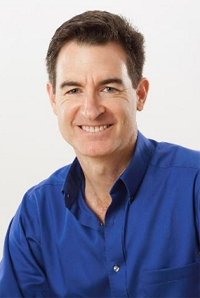
Gene MonterastelliGene Monterastelli is a Brooklyn based tapping practitioner. In addition to working with individual clients and groups, he regularly writes and records about how to use tapping to move from self-sabotage to productive action.
Gene’s Full Bio & Services


Subscribe via: Apple Podcasts | Google Podcast | Android Phone | Spotify | Pandora | Amazon Music | Audible | iHeart Radio | Castbox | Alexa | Stitcher | TuneIn | Deezer | aCast | Himalaya | Overcast | Luminary | RSS
Visit the complete Podcast Archive

Apple App | Google/Android App


This book is not just about EFT and tapping for anger. The book contains some of the most comprehensive step-by-step tapping tools that can be used for all emotions and can be added to your tapping tool set right away.

For every book purchased, four inmates will also receive a copy of the book.

For every book purchased 4 inmates will also receive a copy of the book.

Paperback | Kindle Version

Copyright © 2026 · Refund Policy · Terms of Use· Privacy Policy