
• Skip to primary navigation
  • Skip to main content
  • Skip to primary sidebar
  • Skip to footer
  • Leave A Tip

Tapping Q & A with Gene Monterastelli - Get the most out of tapping and EFT

  • Learn Tapping
  • Podcast
  • Video
  • About Gene
  • Work w/Gene
  • Archive
    • Every Post Ever
    • Q&A
    • Podcast
    • Videos
    • Tools
    • Tap Along
    • Sessions
  • Events
  • Contact Us

Is My Self-Sabotaging Critical Voice Always Going To Be With Me?

May 9, 2013 by Gene Monterastelli

photo by Steve Corey

This week I was working with my client “Molly”. Over the last few weeks we had been tapping for a number of public speaking sales situations. She said:

“Last week was really great. I felt so much more comfortable in my own skin. I was so much more present to my audience and so much less inside of my own head. But I have a question, will that little voice in my head always be there? It feels like it is less powerful now, but it just won't go away.”

This is a great question. In the article “Transforming Your Critical Voice Into Something Helpful In 8 Steps” I showed you how to begin to get a handle on your critical voice. But you will notice I don't talk about making it go away.

There are two things to keep in mind with the critical voice.

It Is There To Be Helpful
I know it can be hard to believe that the critical voice inside your head that is always beating you up is being helpful, but it really is trying to keep you safe. It’s operating from the assumption that if it points out all the things you are doing wrong, you will then correct your actions and make better choices.

You know as well as I do that it doesn't work like that. That nagging voice doesn't usually produce any positive change, it simply brings us down and saps our motivation.

When we do something like this 8 step process we can start to transform our critical voice into something useful.

At first blush it would seem that we just want to silence that tireless, nagging voice, but it can be very useful in pointing out possible obstacles and opportunities.

We Will Keep Trying Harder Things
Even when we have tamed our critical voice and have it under control, it will still be useful to us as we move ahead and aim higher. When we stretch ourselves and attempt new and different things that may be a little scary, our critical voice will show up to try to keep us safe.

The moment my internal voice goes mute is the moment that I have stopped growing and progressing.

Making Sure It Is Helpful
So, to answer Molly's question directly: No, your critical voice will not go away AND that isn’t a bad thing.

Our aim is to move away from an internal battle and to welcome our internal voice as a watchful ally. In doing this we will feel better about ourselves because we aren't being beaten up for the inside out AND we will be able to move forward in a helpful way.

I would encourage you to re-visit “Transforming Your Critical Voice Into Something Helpful In 8 Steps” and start the transformation right now.

Filed Under: Q&A Tagged With: Critical Voice

Is The Way You Are Talking About Your Issues Stopping Your Progress?

April 28, 2013 by Gene Monterastelli

photo by Marlon Malabanan

The words we use to describe our world are very important because they impact the way we understand what we are experiencing. The words we use give our experience meaning.

For example, if I say, “Everyone at work hates me!” that will impact the way I walk into the office because I will have my guard up with every interaction.

If a client says this to me, my follow up question is, “Really, everyone?” Most of the time their response is something like, “No, but Jim, Sally, and Devon really have it out for me.”

You can see that when the work environment is described by having trouble with three people v everyone, we would walk in with a different mindset.

All of this came to mind in a recent client session. “Jeff” was lamenting the fact that he was not tapping as much as he would like. As we continued the conversation it was revealed that the reason he was not tapping was because he was worried that there was some big nasty issue under the surface that he really didn't want to tackle.

That is a perfectly reasonable and common reason that people don't tap.

Later in our session, as we were talking about his plans to tap over the next few weeks, he said, “I am going to set 30 minutes aside each morning to tap on the big stuff.”

I stopped him and said, “I think you are setting yourself up for failure. You said that you were having trouble tapping on difficult issues and now you are saying you want to go after the big. How about you go after the important stuff? That might be big, it might be small, but it will have high value. That will make it easier to do the work.”

I will admit that it seems like a subtle change, but I think words are that important. The way we talk about the world is the way we will then interact with the world.

Take a moment to think about the parts of your life you are not happy with or the issue you normally tap on. How do you describe those problems? Do you describe them as impossible, inevitable, or overwhelming?

Make a list of all the adjectives you would use to describe your issues, write them down, and note your emotional response to those words.

This is very telling. If there is little or no hope of success, or if you describe the process of healing as painful or overwhelming, then you will live up to those words.

When you see the process as too hard or too painful you will sabotage yourself and you will avoid the work you need to do.

If you change the way you talk about your problems then you will also change the way you respond to them.

I would love hear the words you came up with when describing your issues in the comments below.

Here is a tapping script that will help you when feel like your problems are too big or hard:

I know there are a lot of things I need to tap for…Some of these things feel really big…And because they feel so big I don't want to approach them…I am worried they are going to be too much…They will take too much time…And too much effort…It feels like hard work going after them…I am not going to do the hard stuff…I am going to do the important stuff…I am going to work on the issues that are facing me right now…They may be old issues…They may be new issues…But they will be the issues that are impacting me now…And by going after the issues that are affecting me now…I will only need to do as much as is needed to move forward…I don't have to deal with it all right away…Just the things that are holding me back now.

Filed Under: Q&A Tagged With: Sabotage

What Have You Found To Be The Most Successful Approaches To EFT?

March 17, 2013 by Gene Monterastelli

I asked a bunch of my favorite tappers what mistakes beginners and pros make when tapping. Today I have their response to the question “What have you found to be the most successful approaches to EFT”?

Jade Barbee – emotionalengine.com

  • Using specific strategies to tap on the discomfort of change.
  • Addressing past events in detail, one intense aspect at a time (personal peace journal).
  • Addressing limiting beliefs and the consequences of changing them.

Jondi Whitis – eft4results.com

  • Agreeing to meet the person wherever they are and patiently walk beside them.
  • Breathing hope into them as you patiently wade through the specific events that hold these beliefs in place.

Ilana – positive-eft.com

  • Covering as many aspects of the same thing not in the usual way only but covering all senses.

Ann Ross – eftuk.net

  • Deep respect for the client, whatever the problem.
  • A quiet loving energetic space within.
  • Being open to miracles – always – and not expecting or anticipating them.
  • A deep intimacy/acceptance of the client and yourself.

Ange Finn – TapIntoYourself.com

  • I like combining tapping with guided imagery exercises to elicit more right–brained images and information. They can be quite powerful in combination and allow for a lot of creativity for the practitioner.

Lindsay Kenny, EFT Master – ProEFT.com

  • Being flexible, listening to your intuition, having the intention clear about your outcome and remaining open–minded.
  • It also helps to continue to grow and learn. Tapping is an ever-evolving art and will hopefully remain that way. Sometimes people want things to stay the same…and that's not always a good thing. If we are going to continue being successful, we need to allow ourselves to change, grow and evolve; personally and professionally.

Alina Frank — tapyourpower.net

  • The most successful EFT is EFT that is done thoroughly and tested exceedingly well. I also use my own Holographic EFT which assumes that everything and everyone is an illusion of my creation which I am responsible for. Matrix Reimprinting has also changed my practice and I teach it to my students because I feel strongly that no EFT education is complete without it.

Sherrie Rice Smith – EFTUniverse.com

  • When I tap with clients who are literally loaded with problems, I've had the most success, and this can be controversial, too, when I really exaggerate the issues. Many times they will cry, but it is for only perhaps 30 seconds, then the relief floods in. I'm not afraid to say what I intuitively get that they are thinking or have never admitted to another soul on earth! i.e. “I killed that baby” if I'm tapping with a client guilt laden from an abortion 30 years previously. If they feel guilt, it's usually because they are thinking that exact thought. Most admit to me that it is the thought going through their heads.

Colleen Flanagan – EmoRescue.com

  • Clearing all aspects of fear as core issues for unwanted physical, emotional, financial and mental conditions.

Steve Wells –

  • Continual tapping whilst accepting and flowing with whatever comes, thoughts or feelings, without trying to change them, and following wherever that leads.
  • Combining tapping with other ways of shifting energy and emotion, and other Energy Techniques.

Rod Sherwin – tap4health.com

  • Match the clients language, their sensory representation, their metaphors and even their speed of tapping. Also, use questions when tapping to allow the mind to fill in the answers.

Pamela Bruner – MakeYourSuccessEasy.com

  • Longer IS better – there is a huge difference in 10 min vs 30 min. If you really need to reduce a charge in order to see new possibilities, don't give up too soon.

Andy Hunt – practicalwellbeing.co.uk

  • I think a willingness to be open to your experience without fear or favour as you tap on what is going on. This requires quite a lot of humility as a lot of what turns up (at least in my experience) is not very edifying.
  • Persistence and a willingness to pursue the SUDs score down to zero, some of the most important stuff is often hidden between 2 and 0.

Filed Under: Q&A Tagged With: Alina Frank, Andy Hunt, Ange Finn, Ann Ross, Colleen Flanagan, Ilana, Jade Barbee, Jondi Whitis, Lindsay Kenny, Pamela Bruner, Rod Sherwin, Sherrie Rice Smith, Steve Wells

Using EFT For Goals That Are Hard To Measure

March 12, 2013 by Gene Monterastelli

photo by Angie Torres

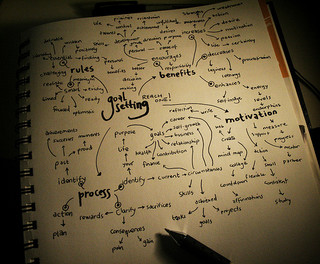
I was recently working with a client, who we will call “Joe”. Joe asked, “I am starting to wonder if I am on the right path. I have a set of goals, but I can't really tell if I working towards them. I know I am working hard, but I don’t know if I am moving forward. How can I tell if I am doing the right work and making progress, or just spinning my wheels avoid the real work because I am afraid of it?”

This is a thoughtful question.

When it comes to judging our success there are two types of goals: those that are easy to measure and those that are hard to measure. As we talked it became clear that Joe's problem stemmed from the fact that he was dealing with goals that were hard to measure.

Let's look at both types to identify the problem and how we can respond.

Easy To Measure Goals

Examples of easily measurable goals are:

  • Lose 25 lb
  • Sell $3000 in products this month
  • Run a 5km race
  • Complete my college degree

The nature of these types of goals make them easy to measure. It is clear how much weight we have lost, how much we have sold, and if we have completed something like a degree or a race. Because these are easy to measure judging our progress and taking clear steps towards them is straightforward.

When the steps are clear it is easier to figure out where our emotional blocks are around the actions that we aren't taking and to work our way through the issues that cause us to sabotage our progress.

Hard To Measure Goals

Examples of hard to measure goals are:

  • Improve my mental health
  • Increase my self esteem
  • Deepen my spiritual practice
  • Be more present to my partner

These are wonderful goals and great things to work towards but Joe's question is important. How can you tell if you are really moving towards these goals when progress is not easily measurable?

To assist with this we can use a simple three step process, first to help us to see a clearer path to achieving these goals, and second to identify the emotional blocks we need to clear in order to move forward.

1) Name the proof that we have achieved our goal
Even though it is difficult to name how we can tell when we have reached a goal that is hard to measure, it is often easier to name the desired outcomes of these goals. Let's take the goal “Increase my self esteem”. Even though I can't measure my self esteem I know what my day looks like when I feel better about myself.

It might look like this:

  • I make more eye contact with my co-workers
  • I give my opinion at work
  • I ask the waiter to have my order fixed when they bring me the wrong meal
  • I end my phone conversation with my friend when she starts to belittle me

All of these outcomes are measurable and because they are measurable we can start to gauge if we are just tapping for an issue, or really doing the important work needed before we can move forward.

In the first step take some time to come up with a list of how you can tell if you are achieving a hard to measure goal. I would encourage you to come up with a list of 10 ways to measure each of these goals.

2) Identify the strategic and emotional blocks to achieving the outcomes
For each of the measurable outcomes ask yourself these 4 questions. Please write out your answers.

* What steps I can take right now to achieve this outcome?
* What emotions do I feel and thoughts do I have when I read the outcome out loud?
* What will I lose,both positive and negative, if I achieve these outcomes?
* What are the possible negative consequences for these outcomes?

Don't rush through your answers. Give yourself time to be thoughtful.

3) Tap through your answers
If you have responded thoughtfully to the first two parts of the exercise you now have a useful script to tap through. Instead of treating this like a traditional tapping script where you simply read each line and tap, I want you to take a little more time.

Read a sentence out loud as you tap and sit with the statement for a few moments. Pay attention to the thoughts and emotions that arise. After a few moments move on to the next phrase.

Conclusion

It is important that we have clearly defined measurable goals, but some goals by nature are hard to measure. If we spend time figuring out how to measure what success can look like and clear the emotional blocks to achieving these outcomes we will be able to move continually toward our goals.

I would love to hear your experience with this process in the comment section below.

Filed Under: Q&A Tagged With: Goals

What Are The Biggest Mistakes Made By Pro Tappers?

March 4, 2013 by Gene Monterastelli

Two weeks ago I shared with you what a bunch of my favorite tappers think are the biggest mistakes made by beginner tappers. Now I have have some of their answers to, “What are the biggest mistakes made by pro tappers?”
[Read more…] about What Are The Biggest Mistakes Made By Pro Tappers?

Filed Under: Q&A Tagged With: Alina Frank, Ange Finn, Ann Ross, Carol Look, Colleen Flanagan, Jade Barbee, Jondi Whitis, Linds, Pamela Bruner, Rod Sherwin, Round Up, Steve Wells, Ted Robinson

  • « Go to Previous Page
  • Page 1
  • Interim pages omitted …
  • Page 14
  • Page 15
  • Page 16
  • Page 17
  • Page 18
  • Interim pages omitted …
  • Page 46
  • Go to Next Page »

10 Steps To Stop Self-Sabotage

Get your FREE 10 step guide to using EFT to stop self-sabotage in your life.

Search Tapping Q & A

Meet Gene Monterastelli

Gene MonterastelliGene Monterastelli is a Brooklyn based tapping practitioner. In addition to working with individual clients and groups, he regularly writes and records about how to use tapping to move from self-sabotage to productive action.
Gene’s Full Bio & Services


Subscribe via: Apple Podcasts | Google Podcast | Android Phone | Spotify | Pandora | Amazon Music | Audible | iHeart Radio | Castbox | Alexa | Stitcher | TuneIn | Deezer | aCast | Himalaya | Overcast | Luminary | RSS
Visit the complete Podcast Archive

Apple App | Google/Android App


This book is not just about EFT and tapping for anger. The book contains some of the most comprehensive step-by-step tapping tools that can be used for all emotions and can be added to your tapping tool set right away.

For every book purchased, four inmates will also receive a copy of the book.

For every book purchased 4 inmates will also receive a copy of the book.

Paperback | Kindle Version

Copyright © 2026 · Refund Policy · Terms of Use· Privacy Policy